



News
Poultry Equipment in Saudi Arabia 2026: Lower Water, Power and Operating Cost Per Bird
Source: TBBView: 89Poultry Equipment in Saudi Arabia 2026: Lower Water, Power and Operating Cost Per Bird
Saudi Arabia's poultry sector is racing toward 90% self-sufficiency under Vision 2030 — yet every bird added now carries a water and power bill the old model cannot absorb. For a producer comparing a poultry cage system, the question is how to reduce water cost per bird. With desalinated water at roughly SAR 3-5 per cubic meter, the farms that treat water and power as a design problem pull ahead.
Saudi Arabia poultry production 2024: 1.2 million tonnes, 72% self-sufficient, 90% by 2030
MEWA puts 2024 broiler output at about 1.2 million tonnes, lifting self-sufficiency to near 72% against the 90% goal set under Vision 2030; Saudi GAP certification now covers roughly 90% of the sector (Environment Ministry, January 2026). The growth is real, but so is the cost pressure: summer ambient temperatures regularly pass 48 C, so cooling and watering a house is exactly where the money goes.
▶ Why water and power costs squeeze Saudi poultry margins
Water is the silent line item. Traditional nipple drinker setups with weak pressure control can waste 30-40% of supplied water through leakage and spillage. At SAR 3-5 per cubic meter, that leakage is paid for twice: once at the meter, once in the pump power to move it. Industrial rates around SAR 0.18 per kWh and water tariffs projected to rise 8-10% soon make every fan hour count. Public financing softens entry: Saudi Arabia's Agricultural Development Fund extends interest-free loans and can finance up to 70% of qualified poultry infrastructure.
▶ Poultry cage system Saudi Arabia: where the cost savings actually come from
The savings do not need a full IoT rebuild: lines that do not fight, drinkers that do not leak, air that moves on schedule.
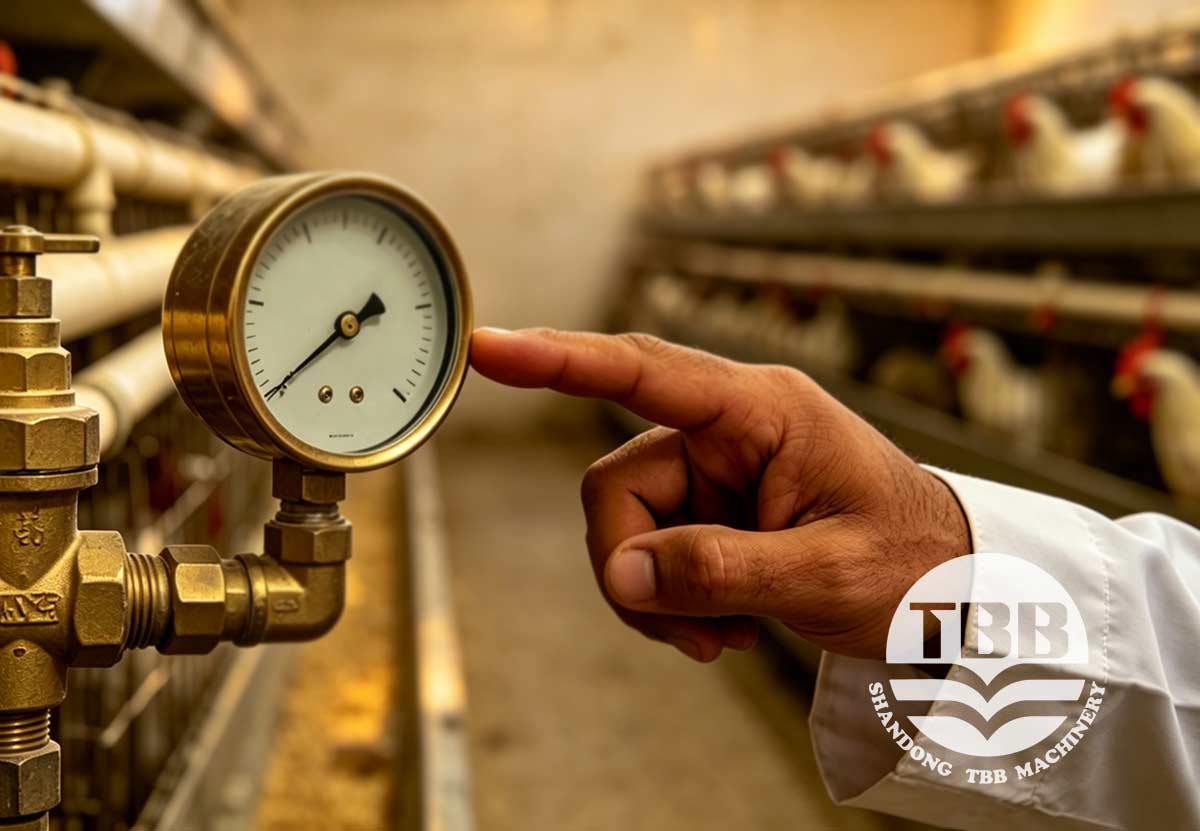
· Regulated drinking lines. Pressure-balanced nipple systems with float or sensor control cut spillage and pull many houses from the industry average near 1.8 liters per bird per day toward the 1.2-liter band without hurting weight gain.
· Climate-first ventilation. Evaporative pad plus tunnel-fan cooling runs on roughly 10-20% of the energy a mechanical refrigeration system would use, and documented retrofits show 40-60% lower summer ventilation electricity than fan-only setups.
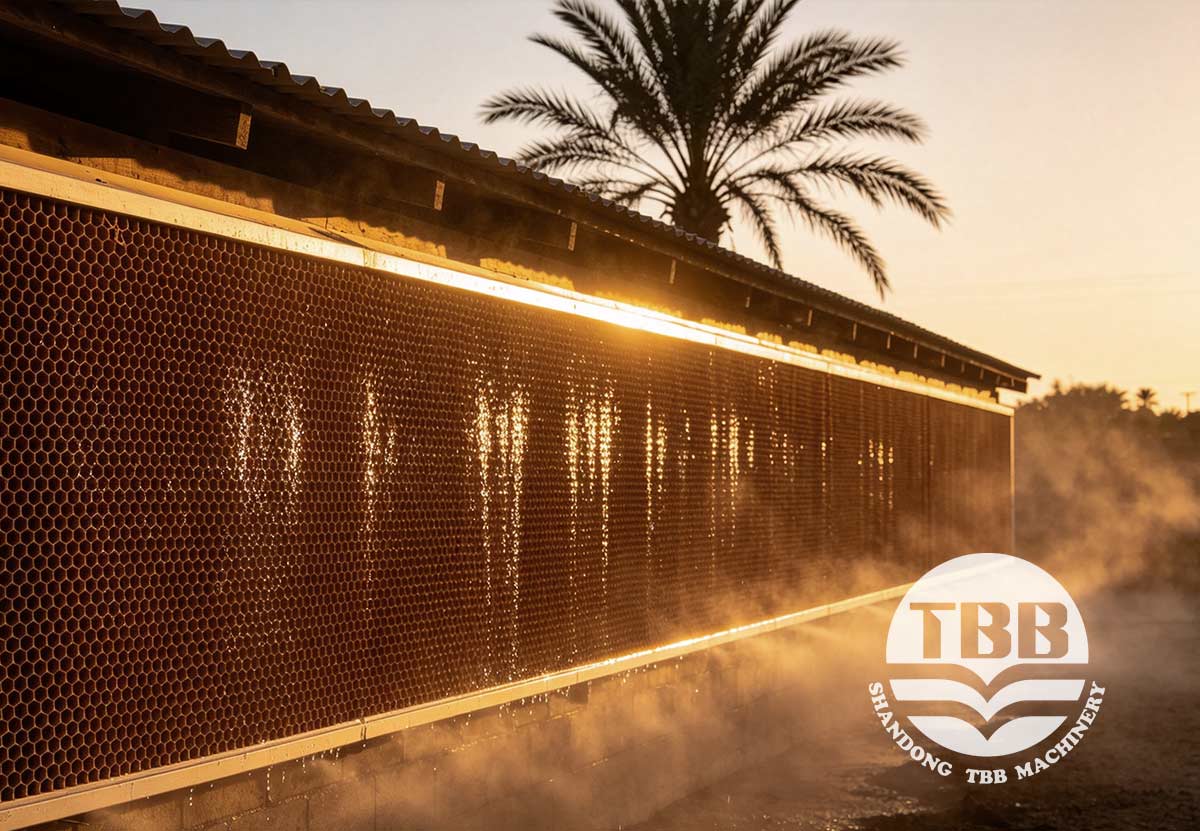
· Feed conversion held steady. Birds in even climate convert feed more reliably; a documented tunnel-ventilated layer house in a hot market lifted egg output 9% and paid back in ~14 months.
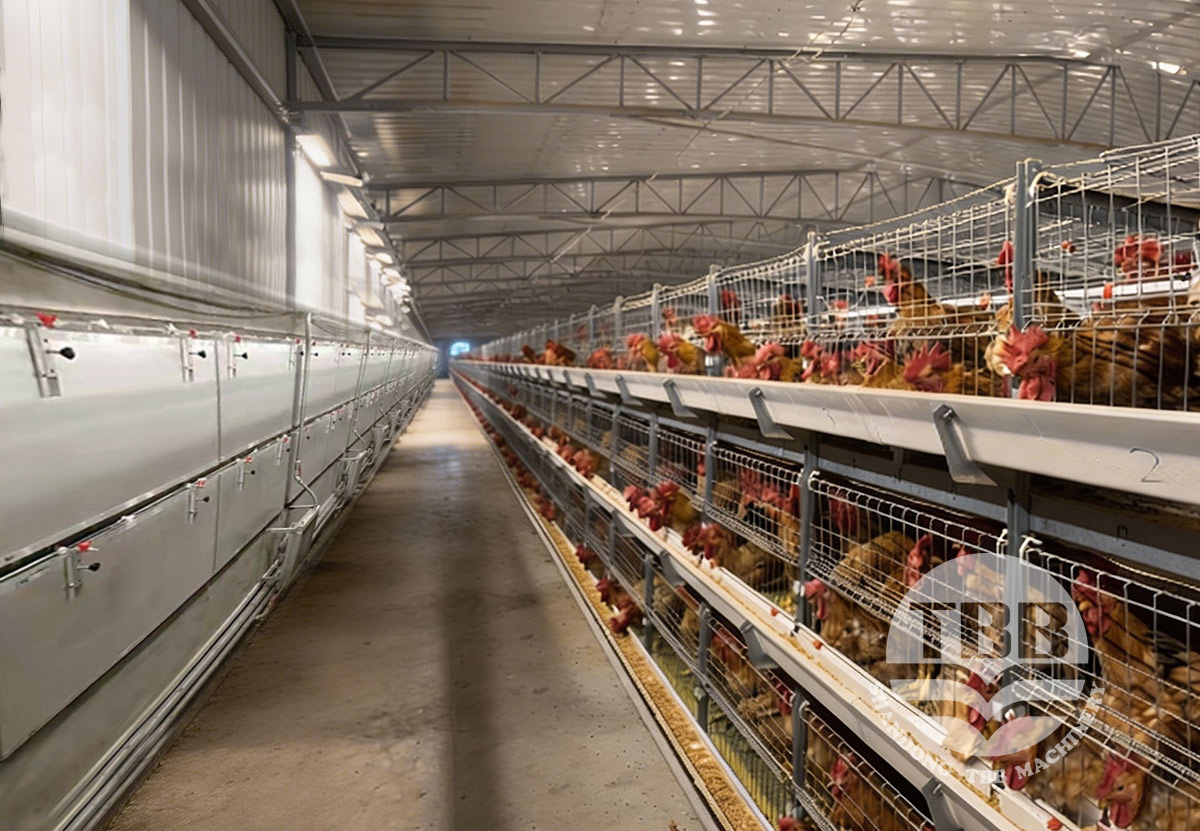
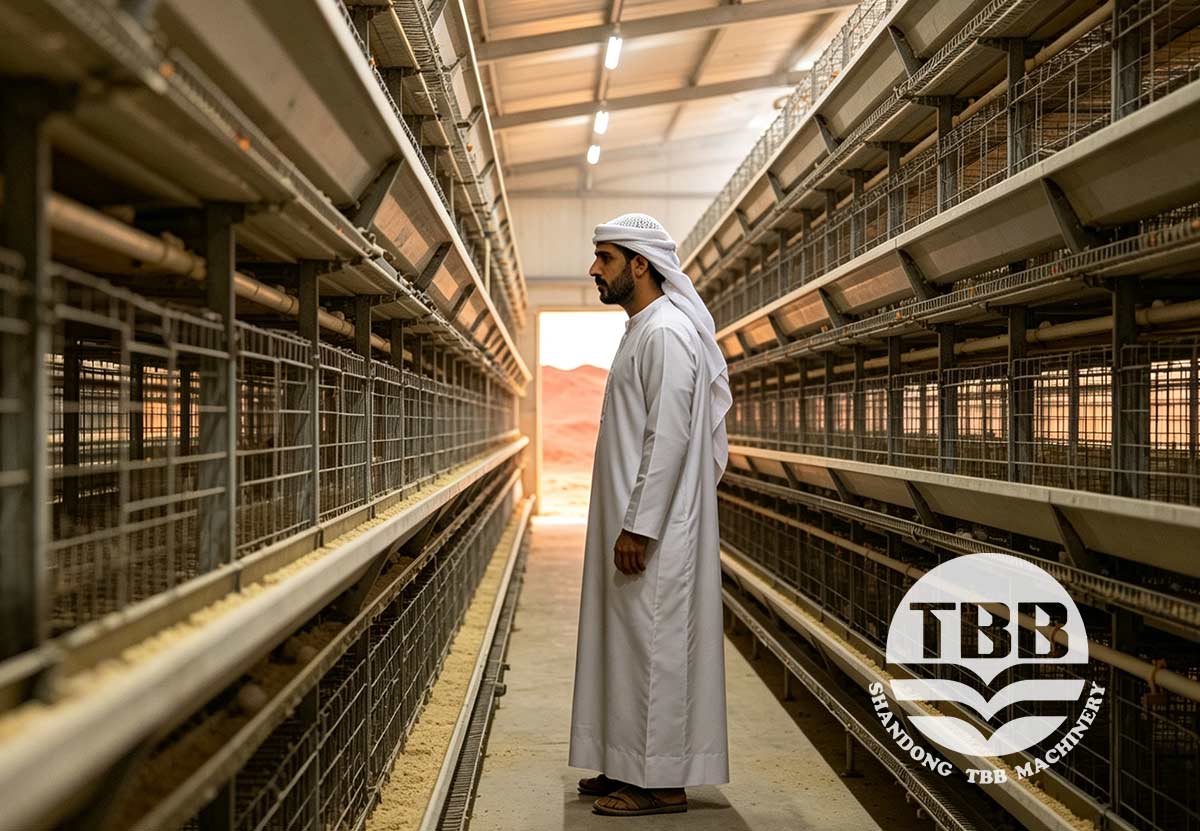
· Automated feed and collection. One matched line of feeders, drinkers, egg belt and poultry manure handling lets a single worker cover multiple houses from a basic controller.
▶ Broiler cage and layer cage systems as knock-down kits for Saudi builds
That is where a knock-down supply model helps. We manufacture poultry cage and rearing systems in China — a poultry equipment supplier shipping matched components as knock-down (flat-pack) kits with full assembly drawings. The house goes up on site: no finished shed crossing an ocean, no parts re-engineered on arrival.
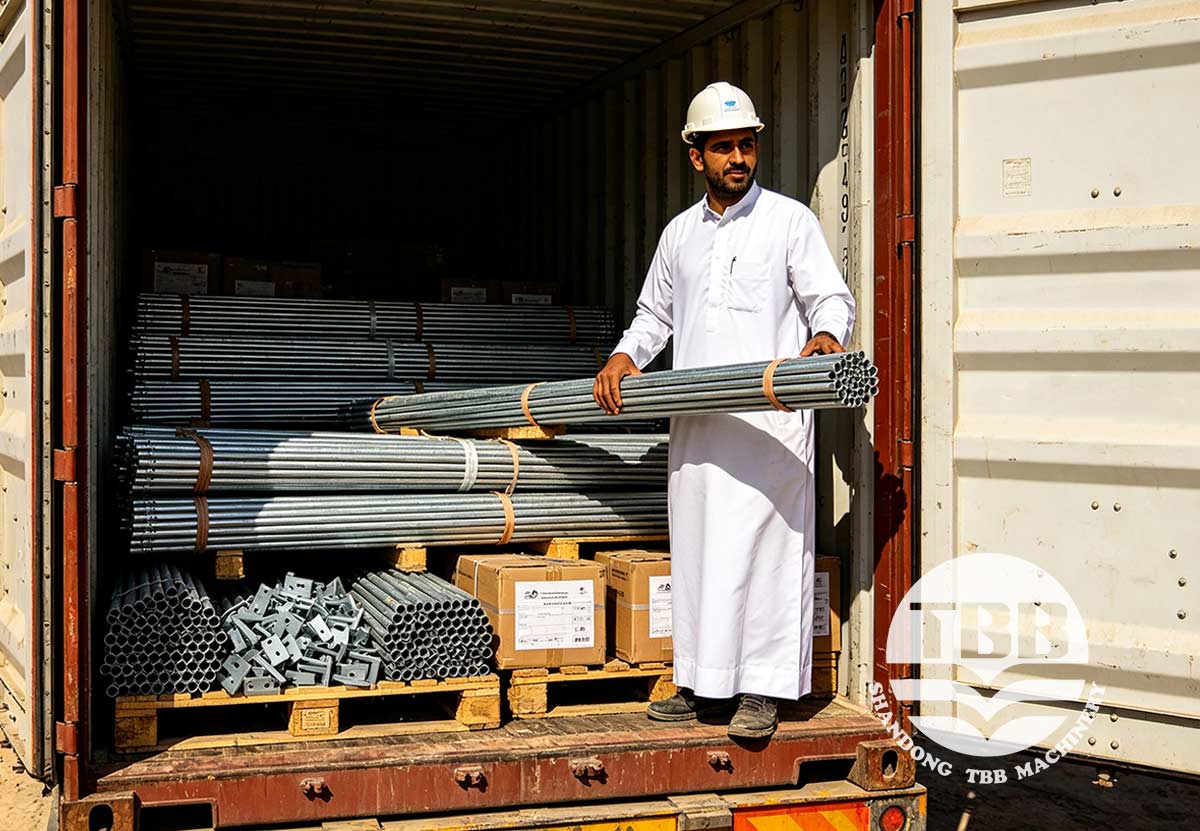
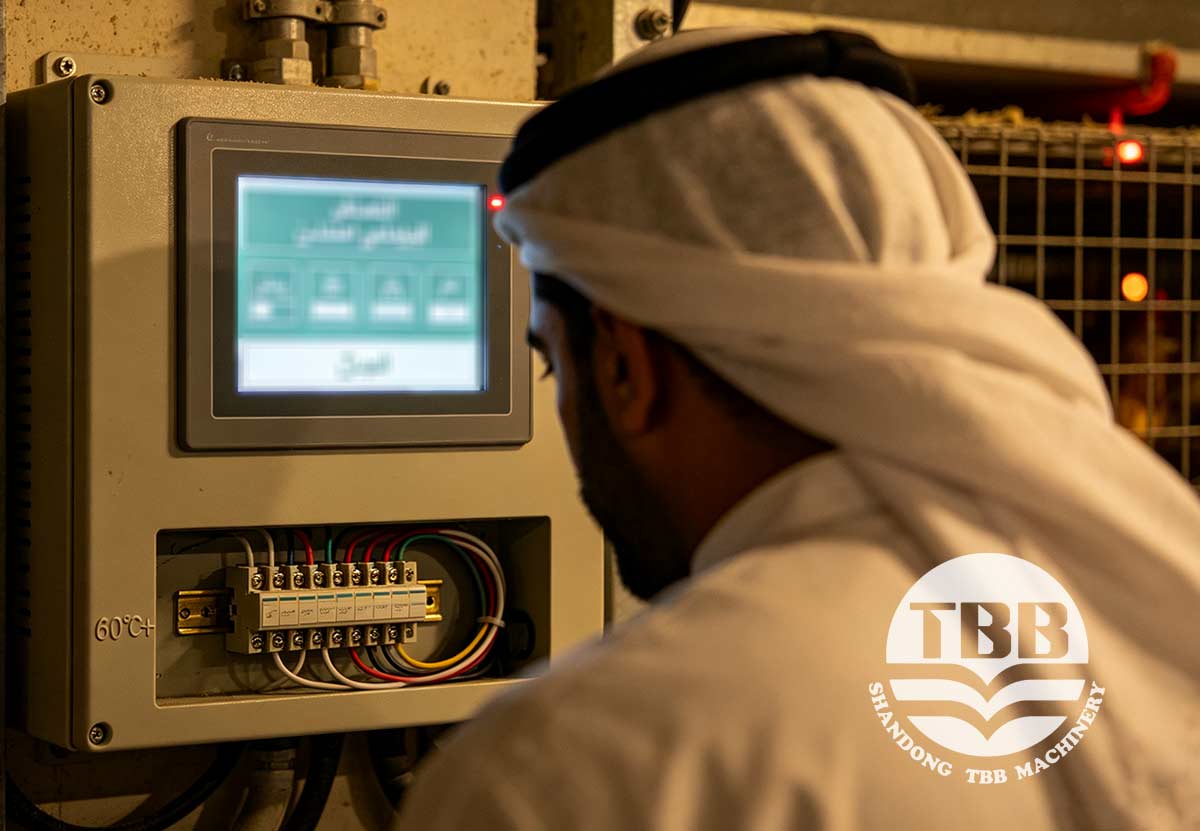
For Gulf builds the spec matters: heat-rated sensors, redundant cooling paths, Arabic-labeled controls. Our range covers both layer and broiler cage systems plus floor-rearing layouts.
▶ Poultry farm cooling system Saudi Arabia: what to specify for 48 C summers
Before committing, check three things for Saudi conditions. First, sensors rated for continuous duty above 60 C, not just ambient-rated parts. Second, a cooling circuit that keeps working if one compressor drops — redundancy is cheaper than a dead house in August. Third, controls your own crew can read in Arabic. A matched drink-feed-vent set removes the interface gaps that appear when those lines arrive from separate suppliers.
▶ FAQ: poultry equipment in Saudi Arabia
What is the best poultry cage system for Saudi Arabia's 48 C summers?
A matched knock-down cage set — broiler or layer — with heat-rated sensors and Arabic-labeled controls, beats a generic imported line because drink, feed and vent are specified as one system, not five.
How much does poultry equipment cost in Saudi Arabia, and does the ADF loan cover it?
Pricing depends on house size and whether you take cage, drink, feed, egg and manure lines as one kit; the ADF can finance up to 70% of qualified infrastructure.
How can a Saudi poultry farm reduce water use without a full rebuild?
Start with pressure-balanced nipple drinkers and a matched drinking line — that alone moves many houses from about 1.8 toward 1.2 liters per bird per day.
▶ The bottom line
Vision 2030 is pushing Saudi poultry toward efficiency whether margins like it or not. The farms that win specified the cage, drink, vent and manure line as one matched set from the start — because that single-set approach keeps a Saudi house running through a 48 C August and turns water and power from a monthly surprise into a number you can forecast. A matched knock-down kit is not the cheapest line on the quote; it is the one that protects every other riyal you spend on the house.
Ready to See Exactly What Your Farm Could Save?
We manufacture and ship complete knock-down poultry systems — cage, drink, feed, egg and manure lines as one matched kit — to producers across the Middle East and Gulf, from small breeder farms to million-bird complexes.
· A free layout and equipment quote for your house — we will show you projected monthly savings down to the riyal.
· Up to 22% off our complete knock-down cage system packages (broiler or layer).
· A dedicated installation-support package included at no extra cost for quotes confirmed before October 31, 2026.
The ADF financing window is also open — and with water tariffs projected to rise, every month you wait is money you could have been saving. Message us on WhatsApp or WeChat. Mention this article to lock in your 22% package discount — but do it before October 31, because we cannot extend this rate beyond that date.