



News
Myanmar Poultry Farm Recovery: Rebuilding After Power and Feed Shocks
Source: TBBView: 188Myanmar Poultry Farm Recovery: Rebuilding After Power and Feed Shocks
Myanmar's poultry sector took two hits in quick succession, and neither one was gentle. First the power. The grid has been unreliable for years, but 2025 pushed it past annoying into dangerous for the birds. Then feed. The 7.7-magnitude earthquake on March 28 damaged several major feed mills around Mandalay. Weeks later, one equipment supplier estimated feed output could drop as much as 15% that year — an early call, since recovery later restored much of that capacity. For operations already stretching every kyat, the second shock hit right on top of the first.
You can read it in the prices. Broiler ex-farm prices in parts of Yangon climbed from roughly 10,000 kyat a viss in early October to above 16,000 kyat a viss by early November 2025. That's not a normal seasonal move. It's what shows up when feed — which runs 70 to 75 percent of a broiler or layer operation's total cost — gets squeezed from both ends at once.
▶ Why the old setup broke
Most small and mid-size farms here leaned on the grid and on manual feeding. When the lights went out for six hours, so did the feeders, the drinkers, the fans. Chicks don't wait, and a layer house without ventilation in Myanmar's heat loses birds. Manual feeding made it worse even on good days: spillage, uneven distribution, labor that doesn't stretch when you're short-handed.
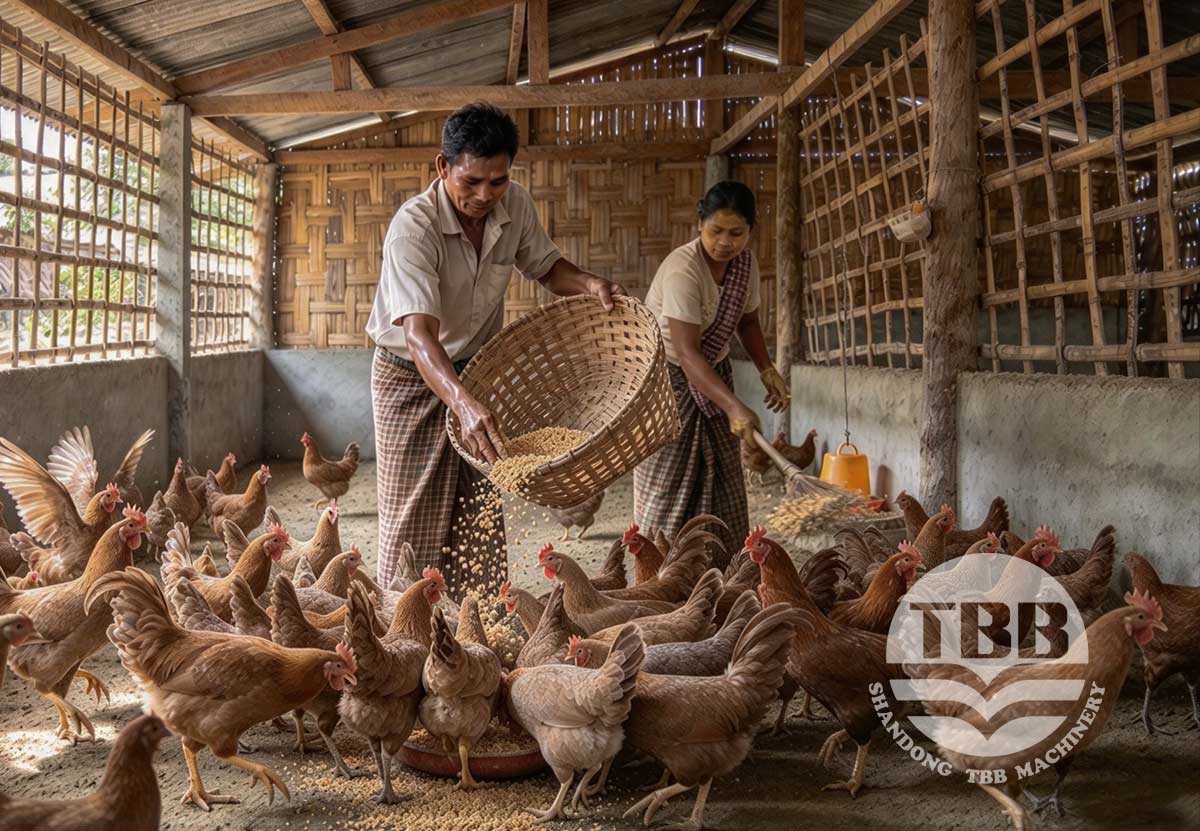
The feed side cut differently. Soybean meal, the protein core of commercial rations, is imported. When the kyat dropped 40 percent of its value in eight months of 2024 and import rules tightened, meal got expensive and sometimes scarce. Farms that couldn't lock in supply cut flock sizes. That matches the 20 to 25 percent drop in commercial chicken production researchers tracked over five years.
▶ Poultry farm equipment after power outage
Farms coming back stronger aren't rebuilding the same setup. They're rebuilding around two rules: ride through the outage, and waste less feed.
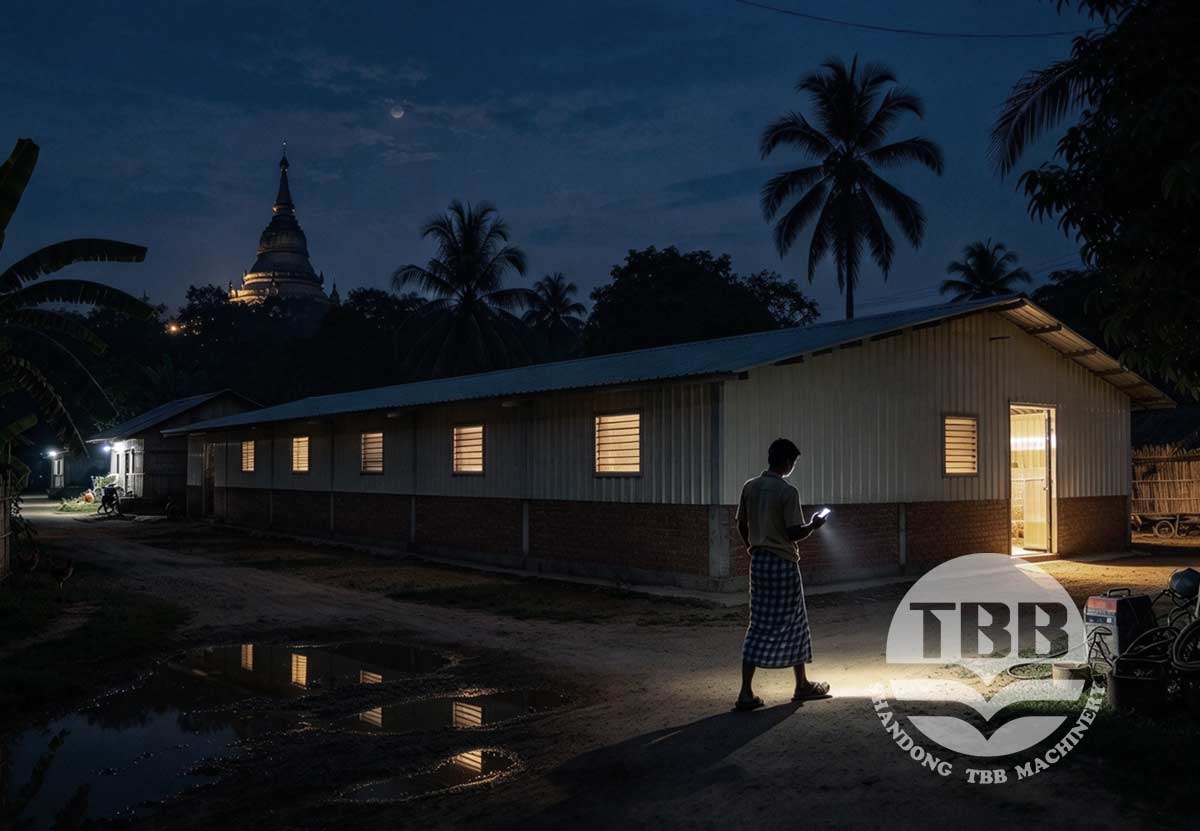
That starts with a layer farm backup power solution. A generator sized to the house, wired to start the moment the grid drops, turns a six-hour blackout from a bird-loss event into a shrug. Ventilation and feeding keep running; the birds never feel it. With the World Bank still listing unreliable electricity as a top constraint, that change decides which farms survive the next shock.
▶ Poultry house ventilation during power cuts
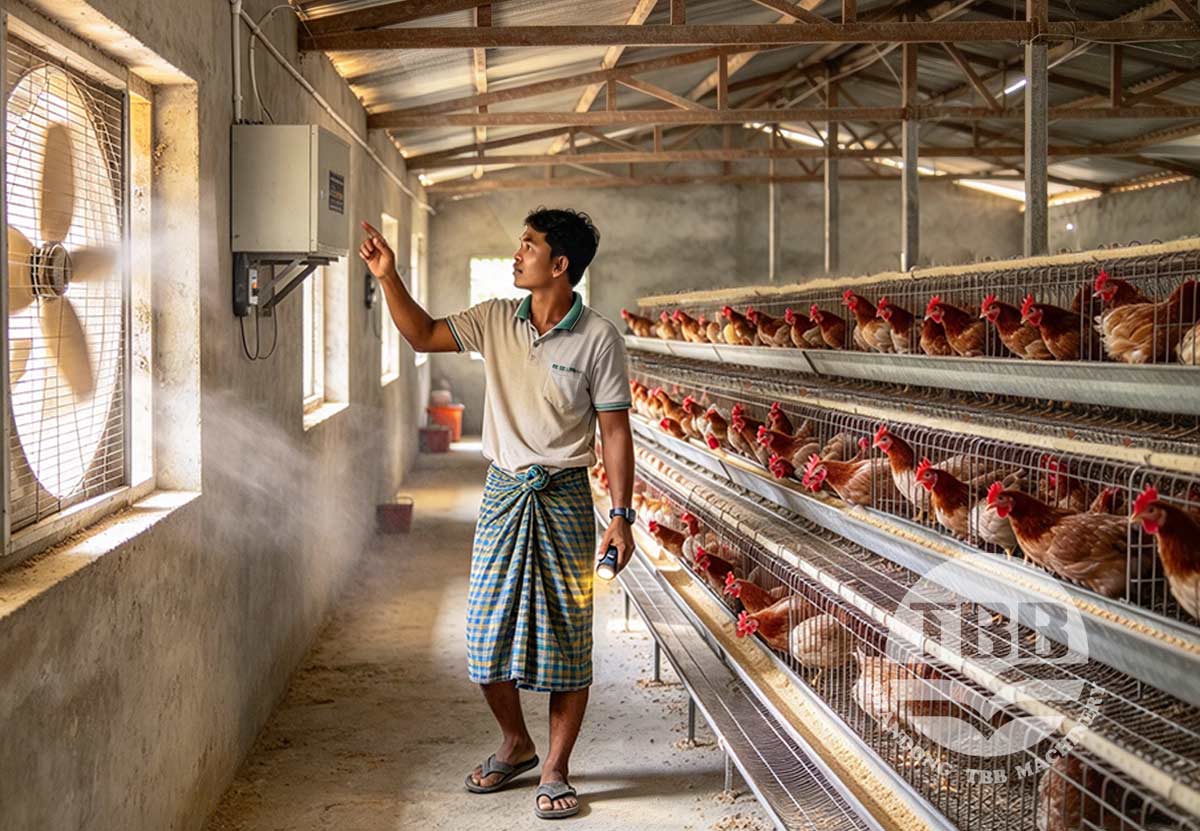
Ventilation is life support here, not a comfort setting. A poultry house ventilation system designed for power cuts stays on the backup circuit, not the grid. Fans, inlet control, and cooling all pull from the generator the second the grid drops. In tropical heat, flocks can't go long without airflow before mortality climbs. Build the ventilation to fail over automatically and the outage becomes background noise.
▶ Automatic chicken feeding system to reduce feed waste
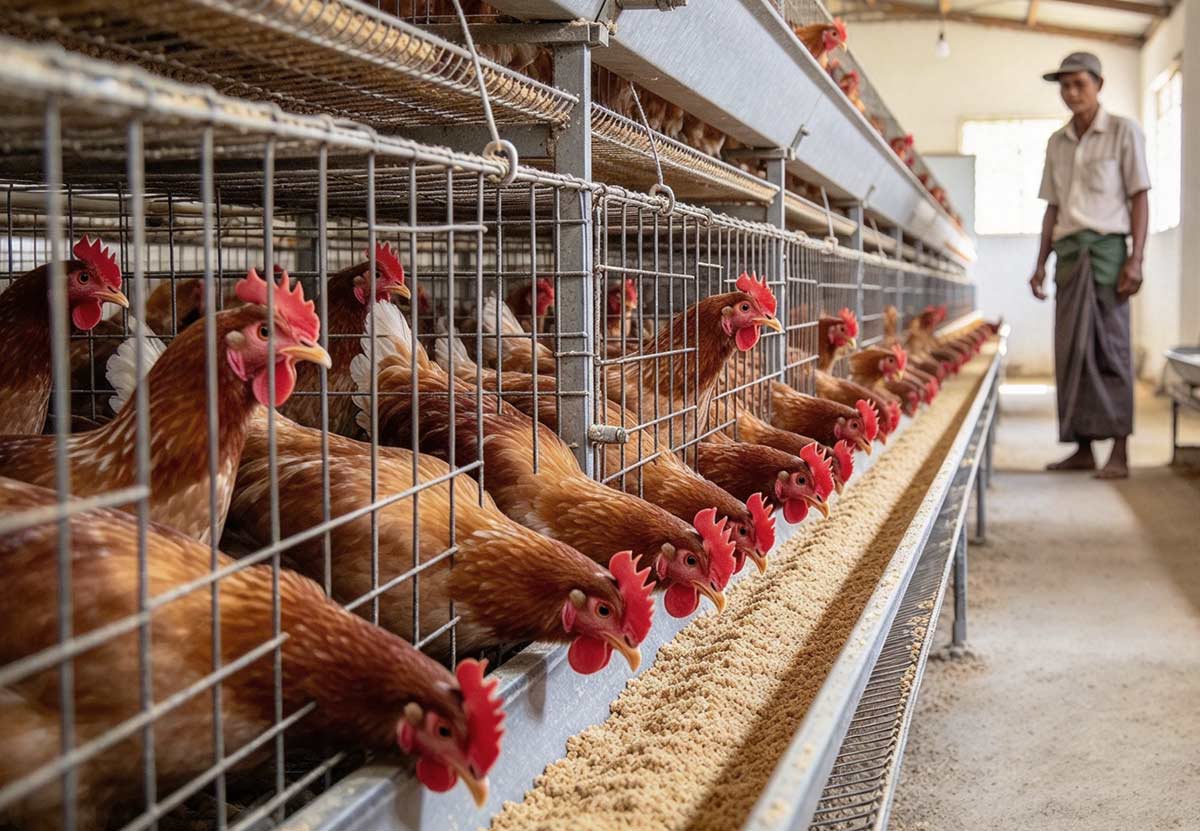
Then the feeding itself. An automatic chicken feeding system cuts the labor and the spillage. With fuel and wages both up, that matters more than it sounds. Less feed on the floor means more of it converts to meat and eggs, and on a thin margin the math is unforgiving. For broilers it tightens feed conversion; for layers it keeps ration consistent so production doesn't dip when labor is short.
▶ Rebuilding layer farm after feed price shock
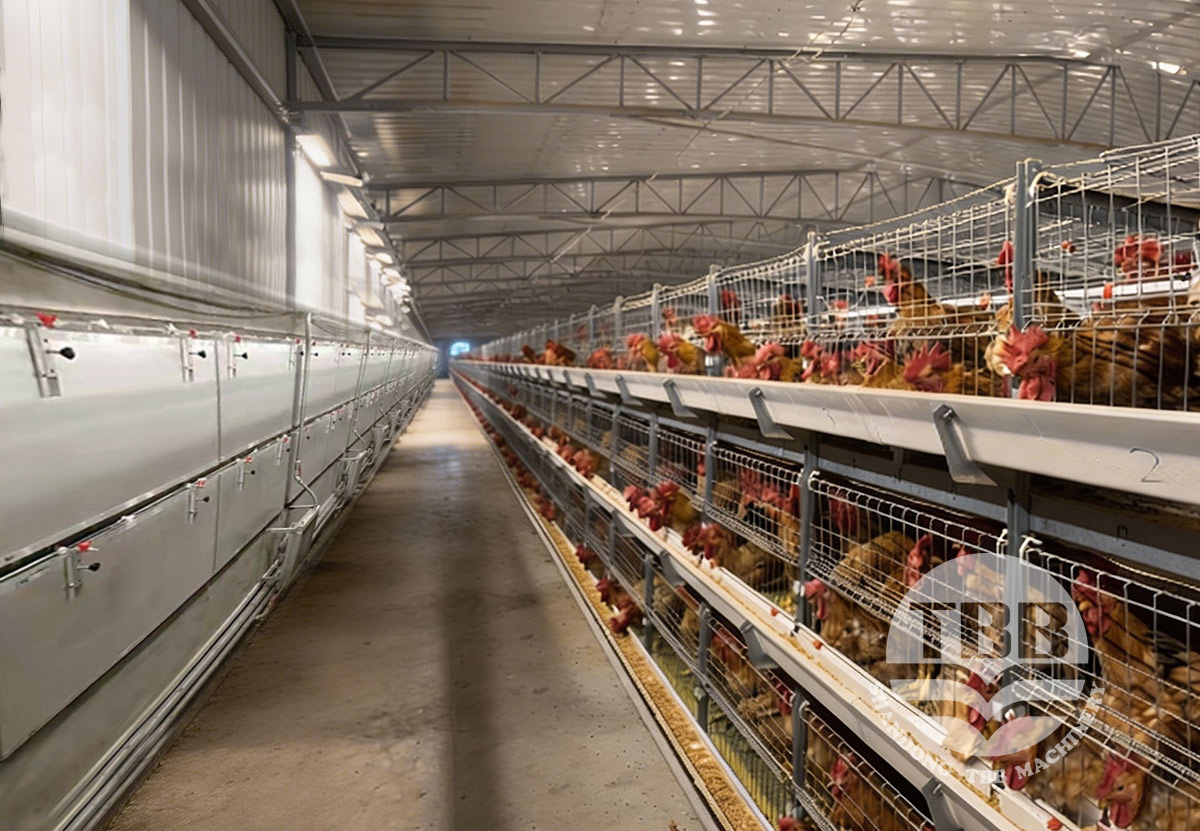
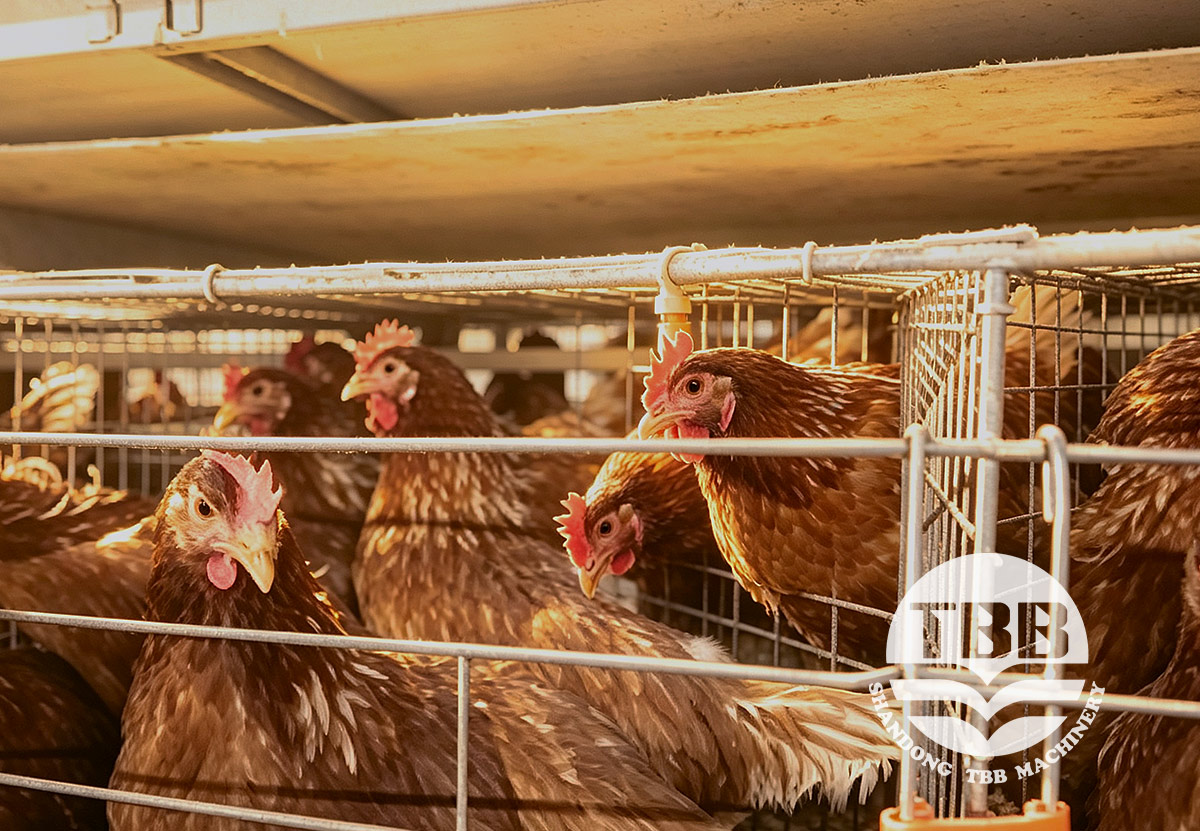
For layers, the rebuild often means moving to a battery cage system for small poultry farm operations that want density without chaos. Done right, it sharpens feed conversion, keeps eggs clean, and makes a power-dependent house easier to run on one circuit. Paired with a poultry feeding system for unreliable electricity, the whole barn becomes predictable — a barn that behaves the same way every day, whatever the grid does.
▶ Egg production recovery equipment
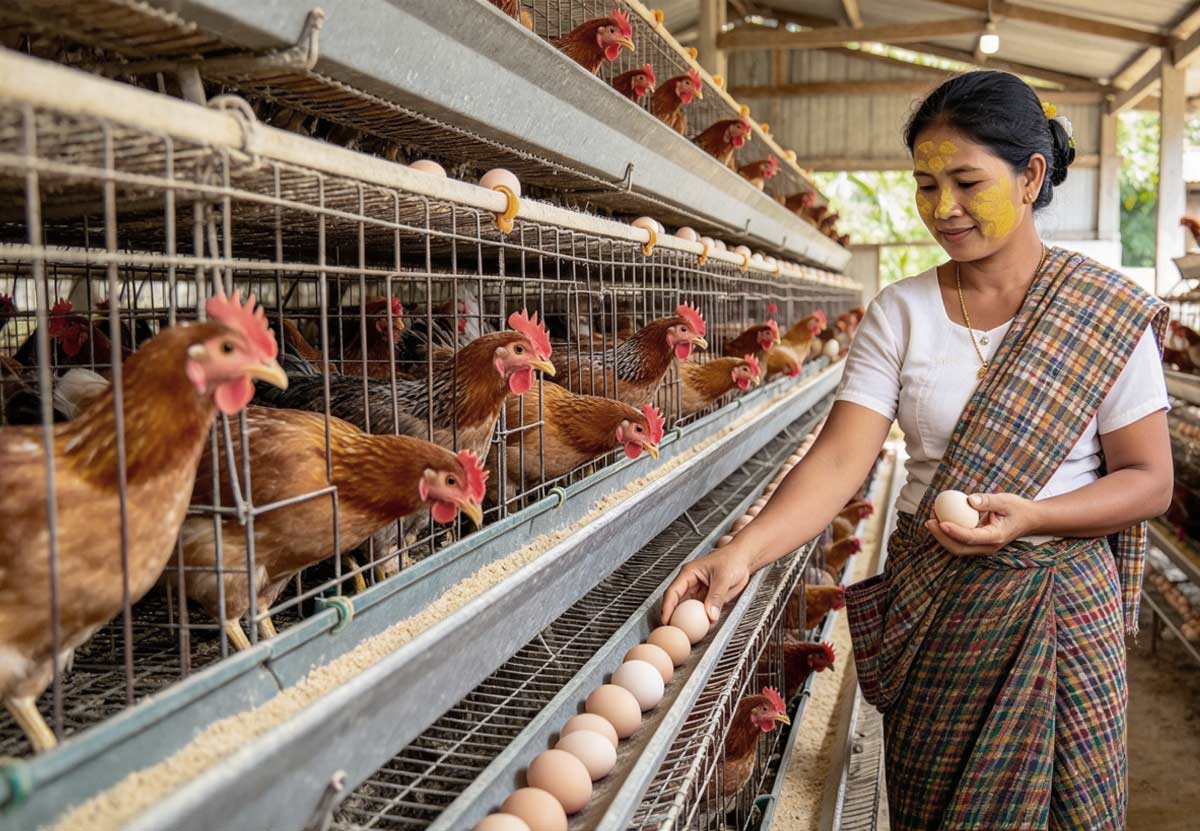
Eggs are where the rebound shows first. A layer flock on steady power and steady feed returns to full lay faster than one fighting outages and ration gaps. Egg production recovery equipment — matched cage, feeding, and climate control on one backup loop — lets a farm rebuild output, not just reopen doors. World Bank analysis in late 2025 highlighted agrifood as one of Myanmar's more resilient economic sectors. The farms that treated the rebuild as an equipment upgrade, not a repair, are the ones the numbers will favor.

▶ The rebuild window is open
None of this has to be built by guesswork. The equipment exists, it's made for exactly these conditions, and farms across the region run it through the same outages and feed swings you face.
If you're planning a poultry farm rebuild in 2026, start where the survivors started — with backup power, not with the cages. Pick a feeding system built for unreliable electricity, not a grid-perfect one, and size cage density to your labor. Then talk to us. We'll match the system to your birds, your power, and your budget — and quote this year's best price when you message us.
Message us for this year's best price.