



News
Jordan Broiler Farm: New Farmer’s Guide to Cutting Costs in 2026
Source: TBBView: 131Jordan Broiler Farm: New Farmer’s Guide to Cutting Costs in 2026
Jordan’s broiler sector looks steady from the outside. The Ministry of Agriculture, via the Petra news agency, puts poultry meat self-sufficiency above 80 percent and table eggs at full self-sufficiency, with sector investment past 2.4 billion dinars. The country moves more than 33,000 tons of poultry meat a month, and the Department of Statistics’ hatcheries survey recorded broiler output up about 13 percent in 2025. For anyone weighing broiler farming in Jordan as a first-time venture in 2026, demand is real — Jordan poultry self-sufficiency 2026 is why investors keep arriving.
The catch is margin: plenty of established farms sell birds below cost when feed spikes. Farm leaders told the Jordan Times feed is about 70 percent of Jordan broiler production cost, and Jordan grows almost none of it — corn and soybean meal arrive by ship, priced in dollars. A first flock raised without a cost plan rarely earns a second. This guide shows a new farmer where the money leaks before the first chicks land.
▶ The 70 percent problem: feed
If you fix only one thing on a broiler farm startup in Jordan, fix feed. The Poultry and Feed Investors Association puts a tonne of broiler feed at roughly 400 to 500 dinars, on top of a 5 percent tax on production inputs. When feed is seven tenths of the bill, a small slip in efficiency wipes the margin. Learning how to cut broiler feed cost in Jordan starts with two numbers, not cheaper chicks.
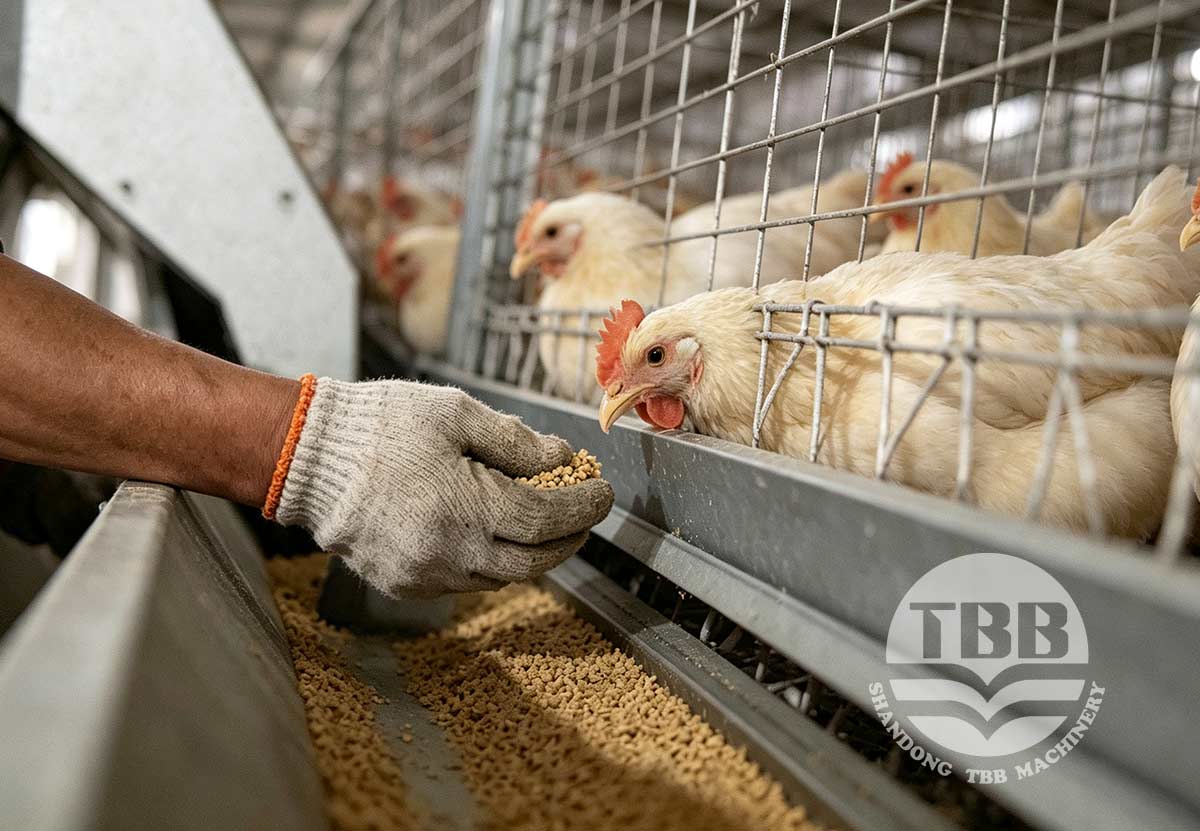
The first is the broiler feed conversion ratio — kilos of feed per kilo of live weight. Jordan farmers watch it in winter, when 24/7 heating makes birds burn energy on warmth instead of growth and the FCR slips about five points. The second is spillage. Open pans and hand feeding waste more than most first-timers estimate. An automated broiler feeding system meters the ration per row, trimming both the waste and the labor of filling pans by hand.
▶ Heat on both ends
Summer in Jordan runs 35 to 40°C and knocks back feed intake and gut health. Winter answers with 24/7 heating that producers say adds roughly 20 percent to production cost. A broiler house for hot climate has to shed heat at 40°C and hold it at 5°C — two opposite jobs from the same shell, and a new build is your one shot at both.
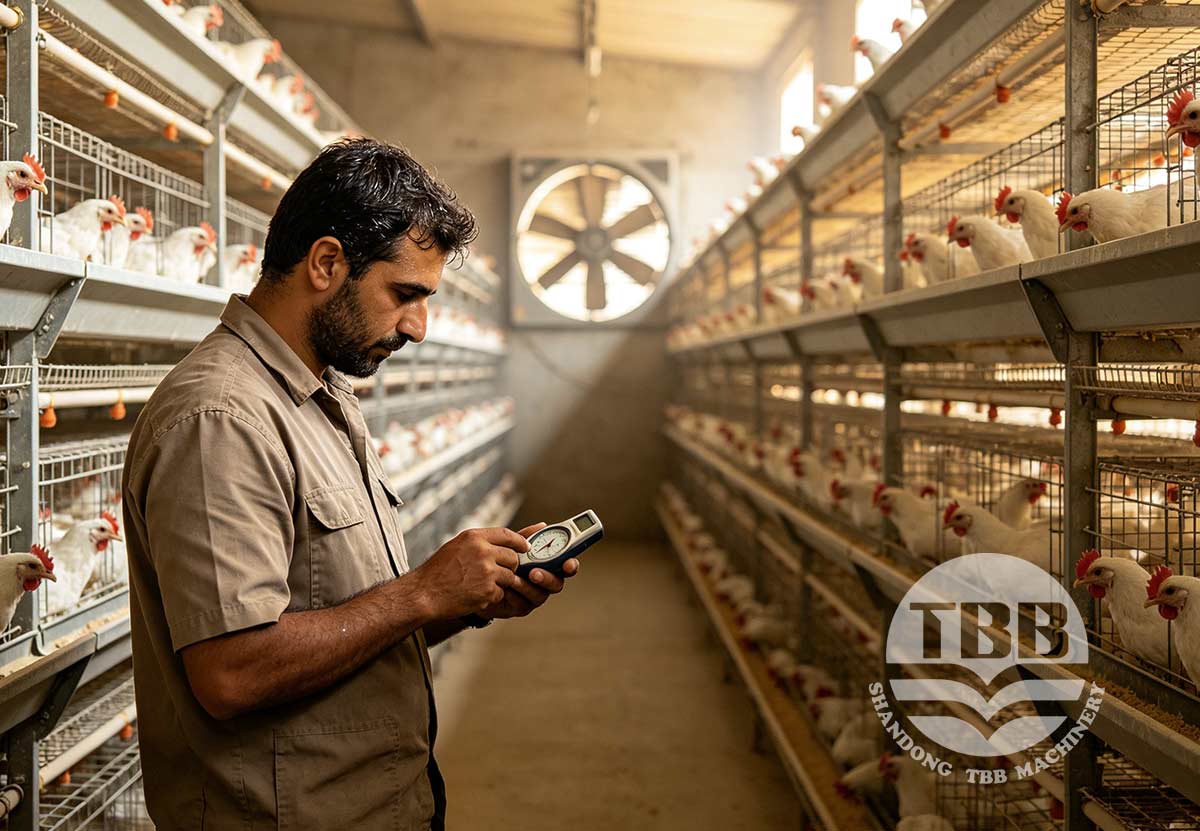
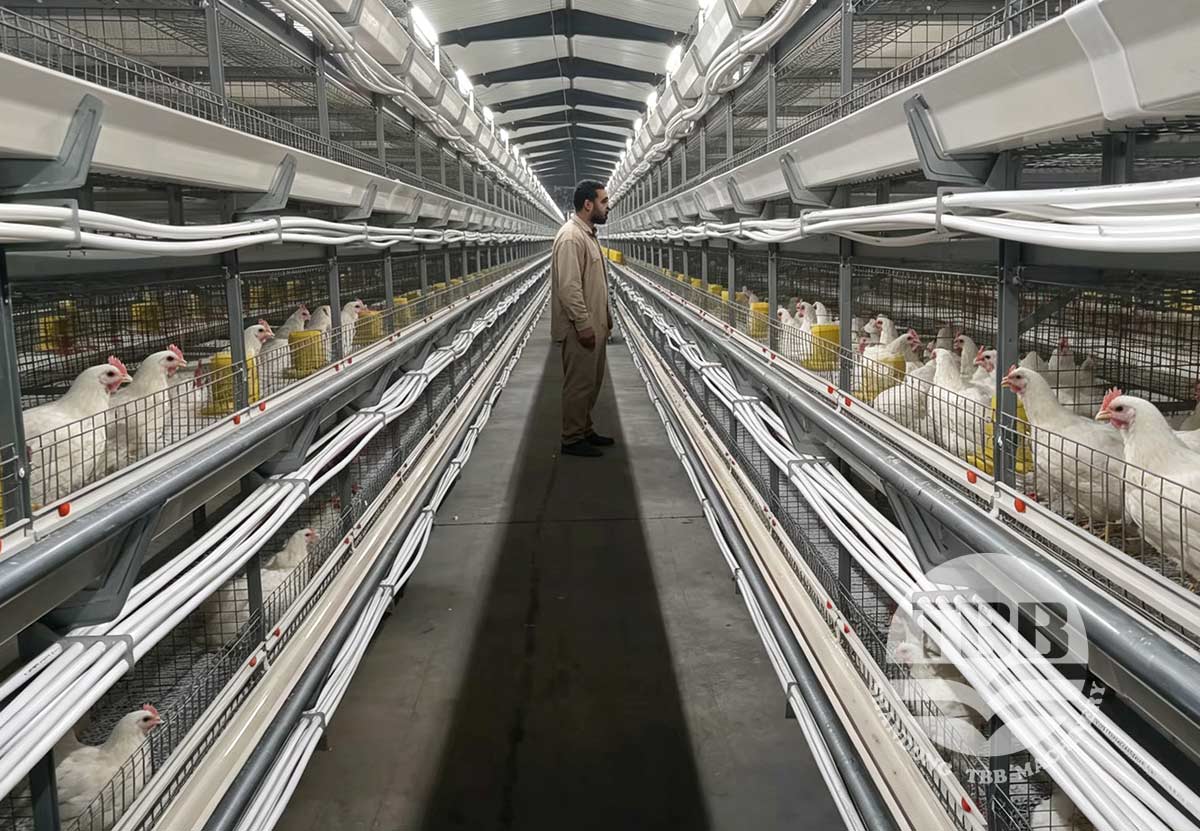
Ventilation is where most of the saving sits. Good airflow keeps birds eating through the hot hours instead of going off feed, and it lets the house trap its own heat in winter so you burn less diesel. Cage rows built with wide spacing and clear belt runs move air the way a packed deep-litter floor cannot. That is not comfort — it is a line item on your feed bill.
▶ Labor and mortality
A newcomer to small scale broiler farming in Jordan budgets for chicks and feed, then gets caught by labor. Daily checks, manual watering, hand collection — it adds up, and steady labor is hard to keep.
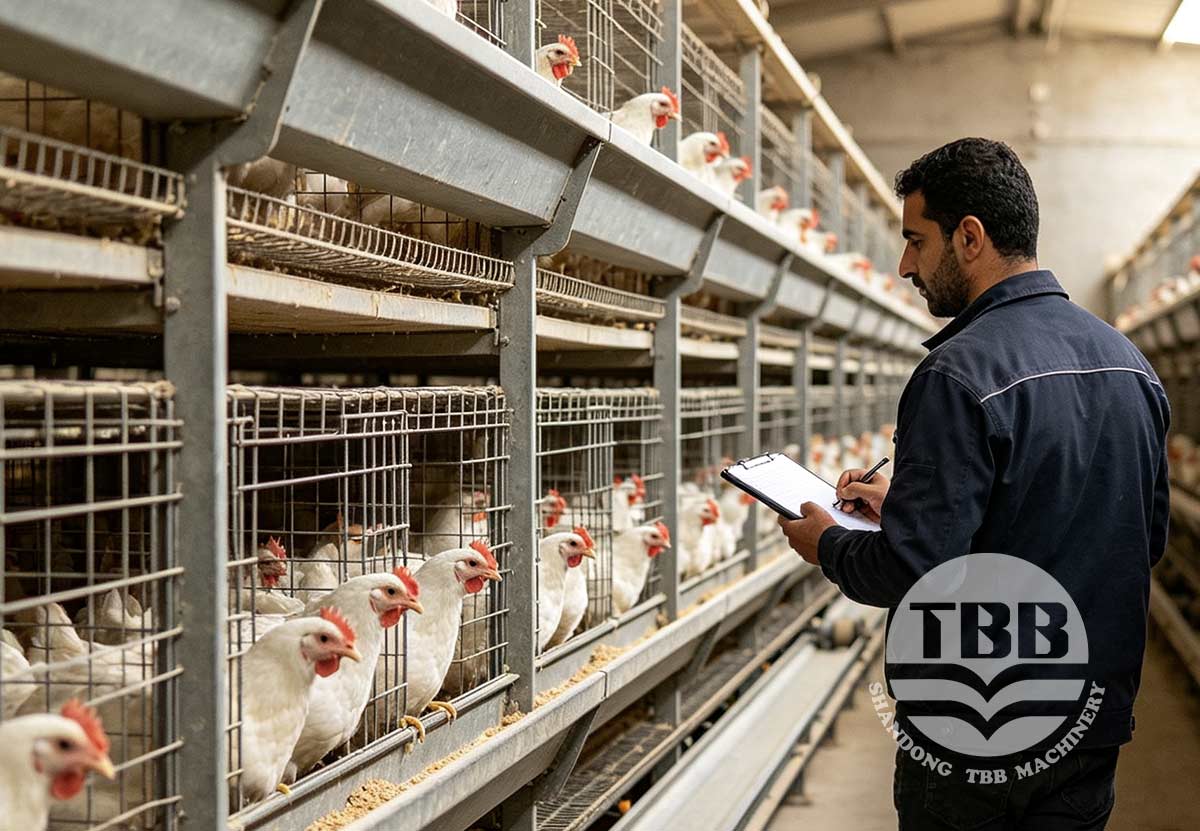
Mechanical feeding, nipple drinker lines, and belt manure removal take the repeat work off your team, so two people run a bigger house. That is how a first farm grows into a second.
Mortality is the quiet tax. Sector reviews have put a broiler mortality rate near 20 percent on older Jordanian farms against about 10 percent in well-run houses elsewhere. A stable, draft-free building with clean air and steady water closes that gap, because broiler mortality rate reduction in Jordan is less about medicine and more about the environment you build around the flock. Every point you pull out is a kilo you paid to raise and never sell.
▶ More from the same floor
Building space is the expensive part; using it well is cheap.
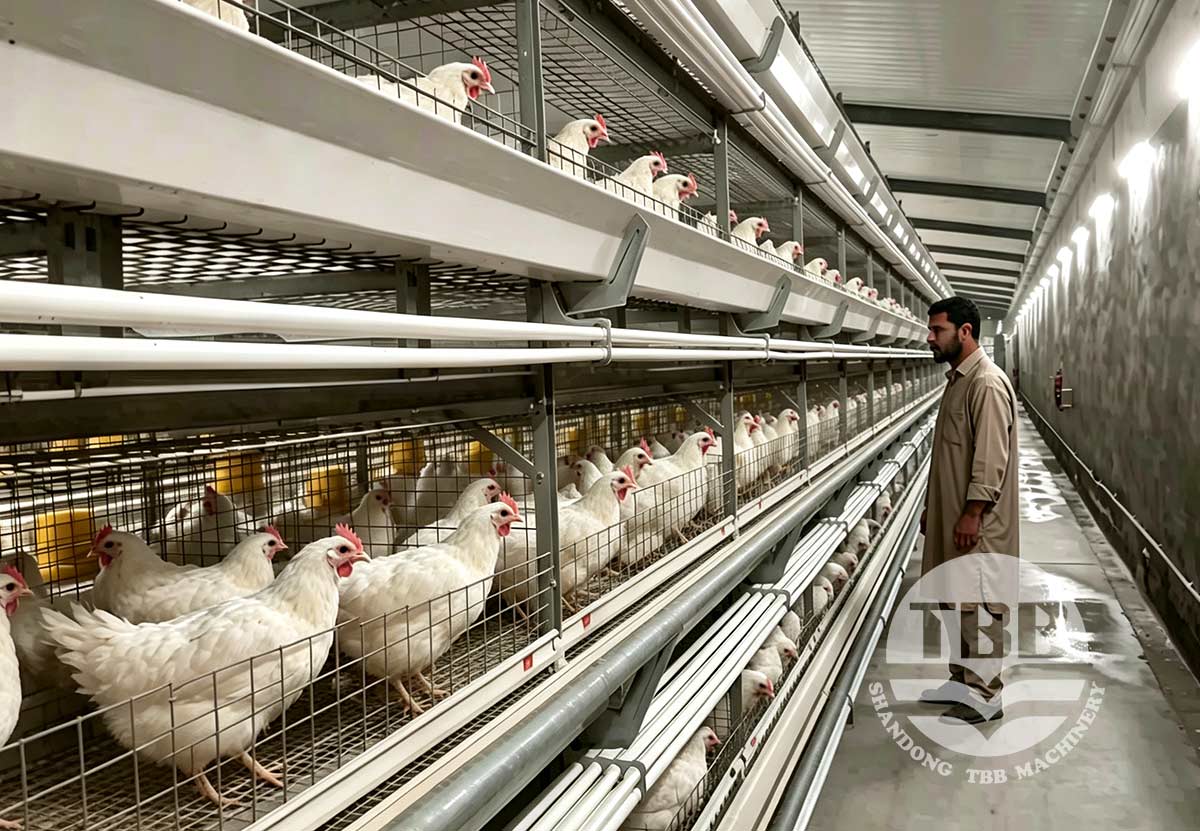
A well-laid automated broiler cage system grows more birds per square meter without crowding them — the cage geometry spreads weight and air, so you scale the flock without rebuilding the house. For a farmer counting every dinar, that density is the line between a first house that pays back and one that does not.
▶ First-year checklist
Before your first cycle, run this list:
· Size ventilation first, birds second. Airflow sets your winter heating bill and your summer FCR.
· Meter the feed and track kilos in against kilos out. A one-point FCR shift beats most price moves.
· Put water and manure on automatic lines so labor stays flat as you grow.
· Read mortality weekly, not at catch. The gap between 10 and 20 percent is the gap between profit and loss.
Notice something: most of that list is decided when you buy equipment, not when you manage birds. That is why the steel under the flock deserves the same scrutiny as the feed contract.
▶ Where the equipment fits
That is the gap Tobetter fills. We build the broiler cage and house systems that do the work above — feeding, drinking, manure belts, bird movement — sized for Jordan’s heat and built to hold through cycle after cycle. It is the steel that keeps your cost per kilo down, not a feed contract or a chick order.
Planning a broiler farm in Jordan for 2026? Send your house size and target flock and we will scope the system that fits. Message us for this year’s best price.