



News
H-Type vs A-Type Layer Cage: Which Is Right for Your Poultry Farm?
Source: TBBView: 84H-Type vs A-Type Layer Cage: Which Is Right for Your Poultry Farm?
If you've ever walked into your egg collection area to find cracked shells, stressed hens, or a manure build-up making ventilation a nightmare — you already know that choosing the wrong layer cage can cost you far more than the initial price tag.
For small and mid-sized poultry farmers across Indonesia, the Philippines, Kenya, and Nigeria, the decision between an H-type layer cage and an A-type layer cage is one of the most consequential investments you'll make. This guide breaks down the real differences, the hidden trade-offs, and the practical advice you need to match your cage system to your farm's size, budget, and growth goals.
What Is an A-Type Layer Cage?
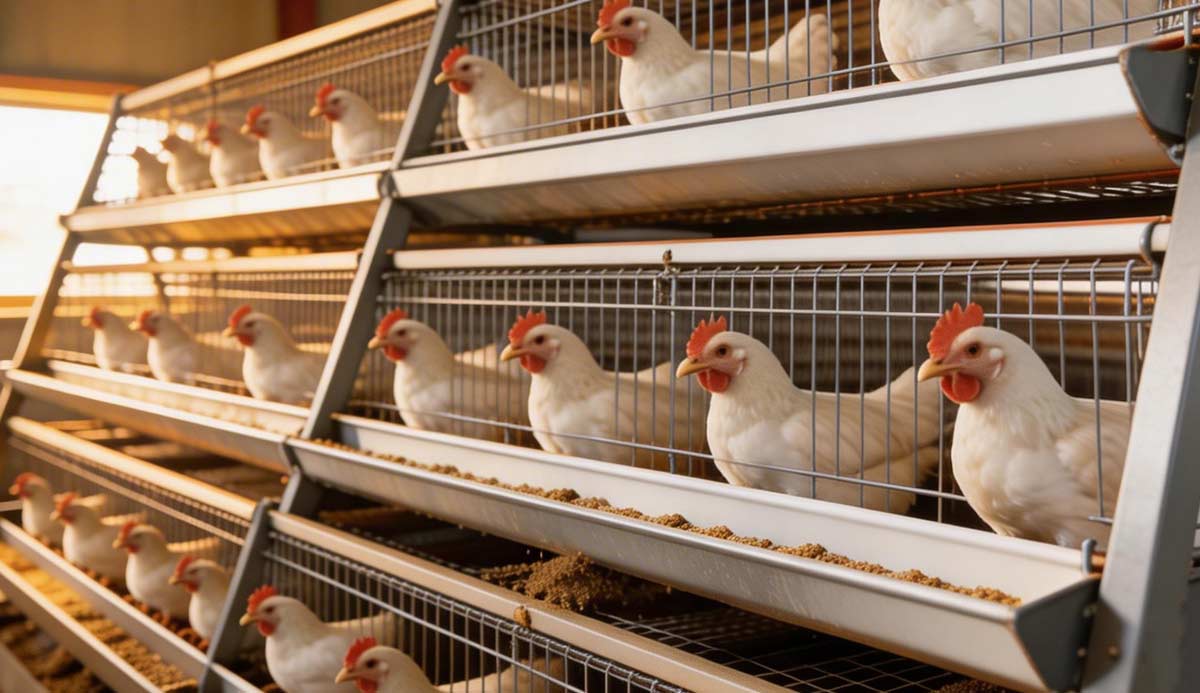
The A-type layer cage — sometimes called a stepped or staircase cage — is the traditional choice for layer battery cage setups worldwide. Its tiers are arranged in a staggered "A" shape, meaning each row is offset from the one above it, allowing droppings to fall freely to the floor below without contaminating lower tiers.
Key Features of A-Type Cages
Tier configuration: Typically 3–4 tiers, staggered layout
Natural ventilation: Open structure allows good airflow without mechanical support
Lower upfront cost: Simpler frame design reduces initial capital expenditure
Easier manual operation: Well-suited for farms relying on hand feeding and egg collection
Where A-Type Cages Work Best
A-type cages remain a popular choice for farms with 5,000–20,000 birds that operate in warm, naturally well-ventilated climates — conditions common across much of Southeast Asia and Sub-Saharan Africa. If your farm is in its early stages, your labor costs are relatively low, and full automation isn't yet on the table, an A-type system delivers reliable performance without overextending your budget.
The staggered design also means you don't need complex mechanical manure removal systems — a significant operational simplification in regions where technical maintenance support may be limited.
What Is an H-Type Layer Cage?
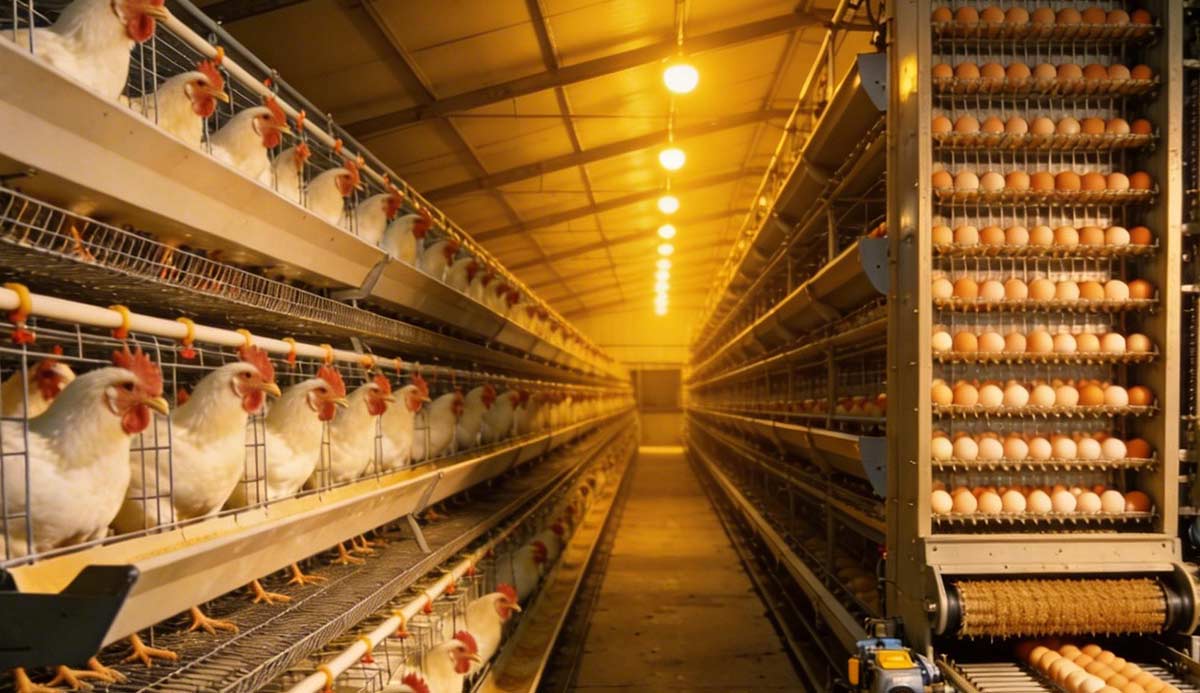
The H-type layer cage — also known as a vertical or battery stack cage — arranges tiers in a straight vertical column, resembling the letter "H" when viewed from the side. Each tier sits directly above the next, with a manure belt running beneath each row to collect and transport waste mechanically.
Key Features of H-Type Cages
Tier configuration: 4–8 tiers, fully vertical stacking
Integrated manure belt system: Waste removed automatically via conveyor belts
High stocking density: More birds per square meter of floor space
Automation-ready: Fully compatible with automatic feeding, drinking, egg collection, and climate control systems
Where H-Type Cages Work Best
H-type cages are built for scale and efficiency. They are the preferred choice for farms targeting 30,000 birds and above, or for farmers who are planning to expand and want infrastructure that grows with them. The vertical design allows you to dramatically increase bird capacity without expanding your building footprint — a critical advantage when land costs are rising or building space is limited.
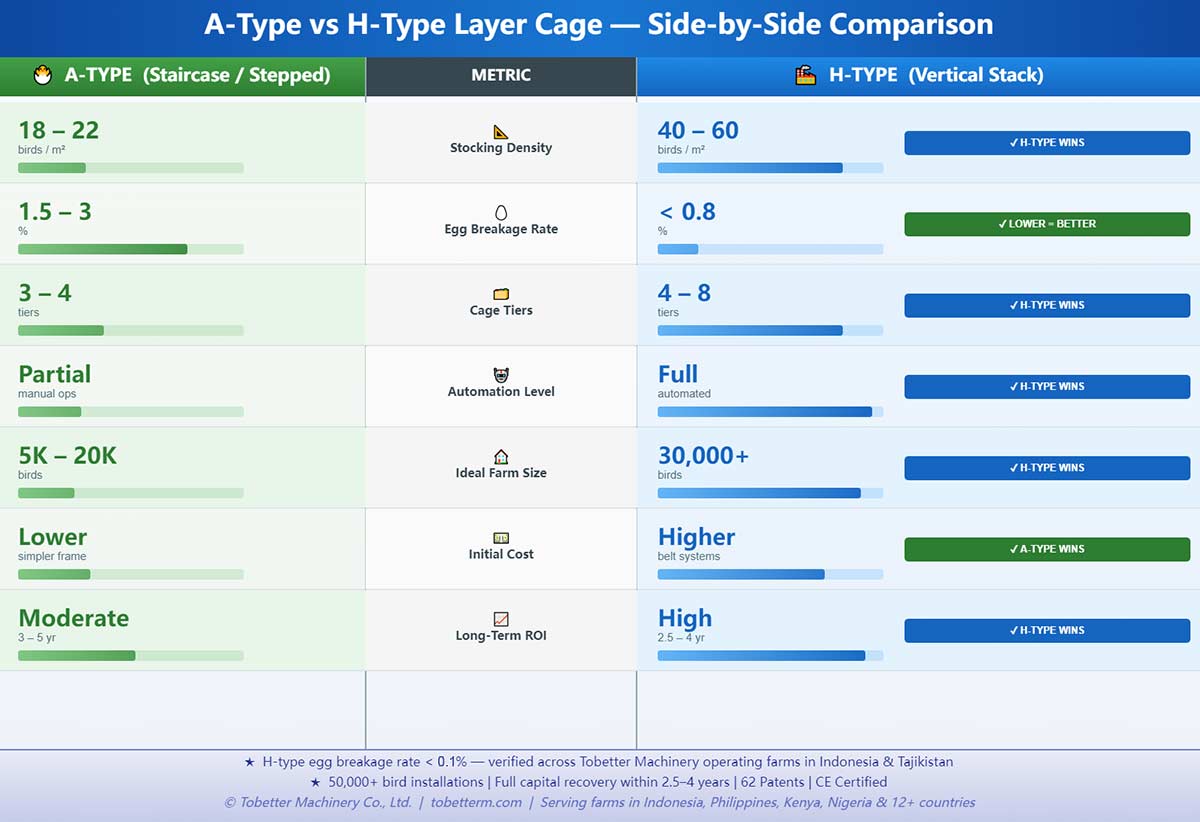
Beyond scale, H-type systems deliver measurable gains in egg quality. Tobetter Machinery's H-type layer cages achieve an egg breakage rate of less than 0.1% — a figure verified across their operating farms in Indonesia and Tajikistan. When you're producing tens of thousands of eggs per day, even a 1–2% reduction in breakage translates directly into significant revenue recovery.
H-Type vs A-Type Layer Cage: Side-by-Side Comparison
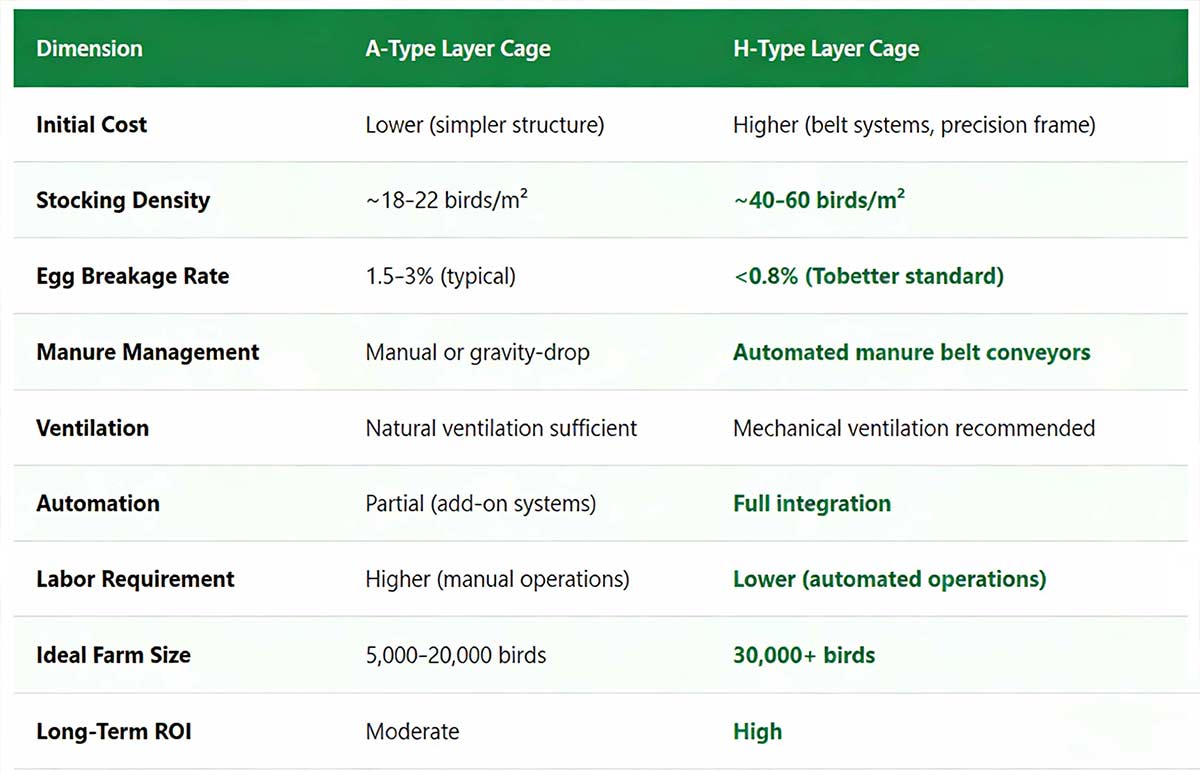
Key Insight: While A-type cages win on upfront cost, H-type cages typically deliver a stronger poultry farm ROI over a 3–5 year horizon through lower labor costs, reduced egg losses, and the ability to scale without rebuilding infrastructure.
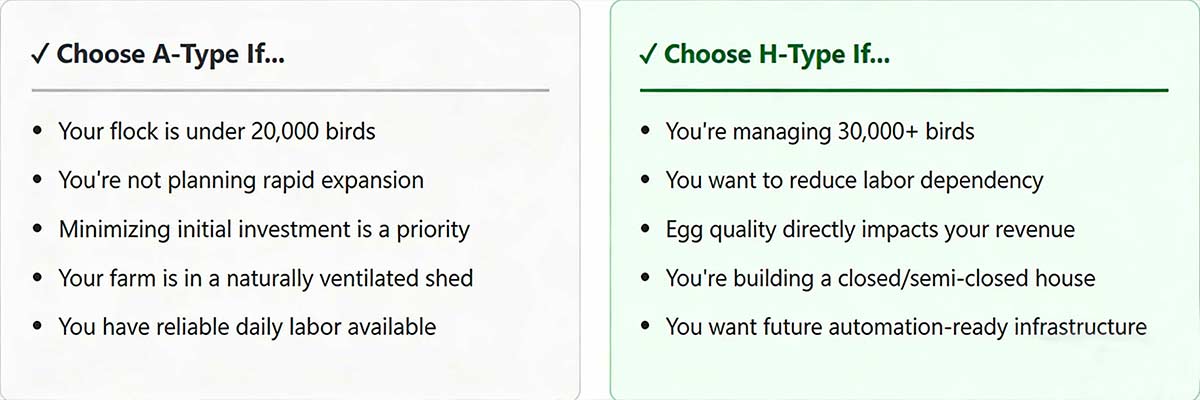
How to Choose the Right Layer Cage for Your Farm
A Word on Budget vs. Total Cost of Ownership
Many farmers in Nigeria and Kenya have made the mistake of choosing A-type systems purely on purchase price, only to find that higher egg breakage, increased labor costs, and poor manure management erode margins year after year. The smarter calculation isn't "what does it cost to buy?" — it's "what does it cost to operate over five years?"
Tobetter Machinery, backed by 62 patents and CE certification, works with farms across Southeast Asia and Africa to calculate total cost of ownership before recommending a configuration. Their self-operated farms in Indonesia serve as real-world benchmarks — not just marketing claims. Based on reference installations, most farms operating 50,000+ birds report full capital recovery within 2.5 to 4 years.
FAQ: H-Type vs A-Type Layer Cage
Q:Can I start with A-type cages and upgrade to H-type later?
Yes, but it typically requires replacing the entire cage structure, not just retrofitting. If expansion is likely within 3–5 years, many farm consultants recommend starting with H-type from the outset to avoid double capital expenditure.
Q:Is H-type suitable for hot climates like Indonesia and Nigeria?
Absolutely. H-type cages are widely used across tropical regions, including Tobetter's own operating farm in Indonesia. The key is pairing them with proper mechanical ventilation or evaporative cooling — your cage supplier should provide climate-matched house design recommendations.
Q:How does manure management differ between the two systems?
A-type systems rely on manual scraping or gravity drop — manageable at small scale but labor-intensive as flock size grows. H-type cages use automated manure belt conveyors that remove waste on a timed cycle, significantly improving air quality and biosecurity.
Q:What is the typical payback period for H-type layer cages?
Based on farm data from Tobetter's reference installations, most mid-to-large farms operating 50,000+ birds report full capital recovery within 2.5 to 4 years, driven by reduced egg breakage, lower labor costs, and higher stocking efficiency.
Ready to Find the Right Cage System for Your Farm?
Get a free farm assessment and customized cage configuration proposal from Tobetter's technical team. Serving farms in Indonesia, Philippines, Kenya, Nigeria, and 12+ countries.
Spots for free assessments are limited—reach out today!