



News
Colombia Broiler Houses: Ventilation Setups That Handle Humid Highlands
Source: TBBView: 80Colombia Broiler Houses: Ventilation Setups That Handle Humid Highlands
Colombia processed 909 million broilers in 2025 — third in Latin America behind Brazil and Mexico — with consumption at 37.8 kg per person. Much of it is grown well above sea level — Cundinamarca and Boyacá, on the altiplano cundiboyacense, rank among the main producing departments. Bogotá sits at 2,640 metres there, humidity runs near 80% for much of the year, and clear nights drop to 5 or 6°C.
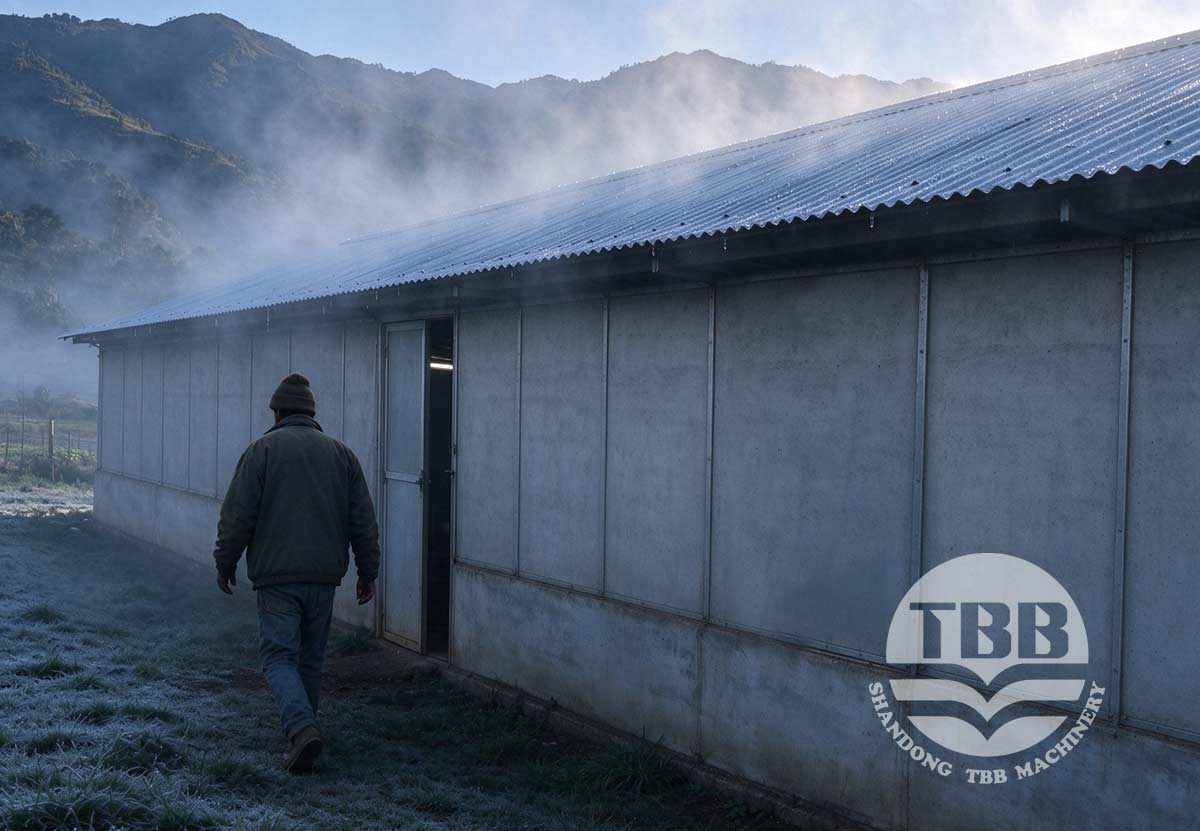
That combination breaks the assumptions most ventilation equipment is sold on. Ratings are measured at sea level, and your house isn't at sea level. Fan sizing, inlet area, minimum ventilation, litter condition — all of it shifts because of that.
▶ Thin air does less work than the catalogue says
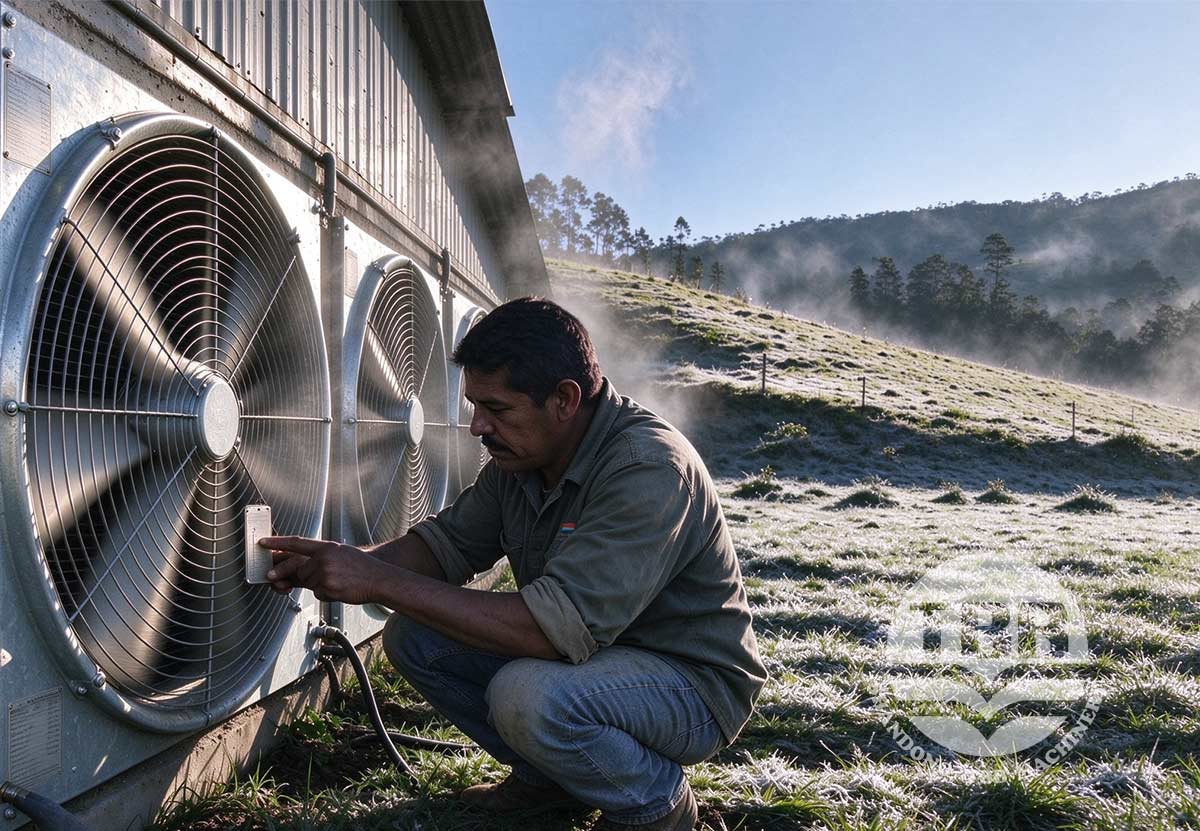
A fan rating is a volume, not a mass. Move 20,000 m³/h at sea level and you've moved roughly 24 tonnes of air in an hour. Move the same volume at 2,500 metres, where density is about 0.74 of sea level, and it's nearer 18 tonnes.
The working numbers, dry air at 20°C: at 2,500 m a fan develops roughly 74% of its catalogued pressure and power, and needs about 136% of the sea-level volume to carry off the same heat. At 3,000 m: 69% and 145%.
Nothing is broken — the air is just thinner. But a house sized off a catalogue at 2,600 m is under-ventilated from day one, and it won't show up as an airflow problem. It shows up as litter that never dries, ammonia at the door, and weights that spread out in the final two weeks.
Ask for the density-corrected curve at your altitude. A supplier who can only quote sea-level figures hasn't sized your house.
▶ Oxygen is the variable people forget
Highland growers plan for cold. Fewer plan for oxygen.
Ascites is why they should. Published work puts incidence at 13% of broilers at 1,980 m, 27% at 2,438 m, and 80% at 2,896 m, with effects turning serious above roughly 1,200 m. Colombia is named alongside Mexico, Ecuador, Peru and Bolivia — countries where 2,000–2,800 m makes it a standing concern. Mortality typically runs 8–12% and reaches 25% in bad cases.
The trigger is hypoxia, and the commonest way a farm creates it is shutting the house up on a cold night. Tight house, less oxygen, more CO₂ and ammonia — exactly what pushes a fast-growing bird into right-heart failure at five to seven weeks.
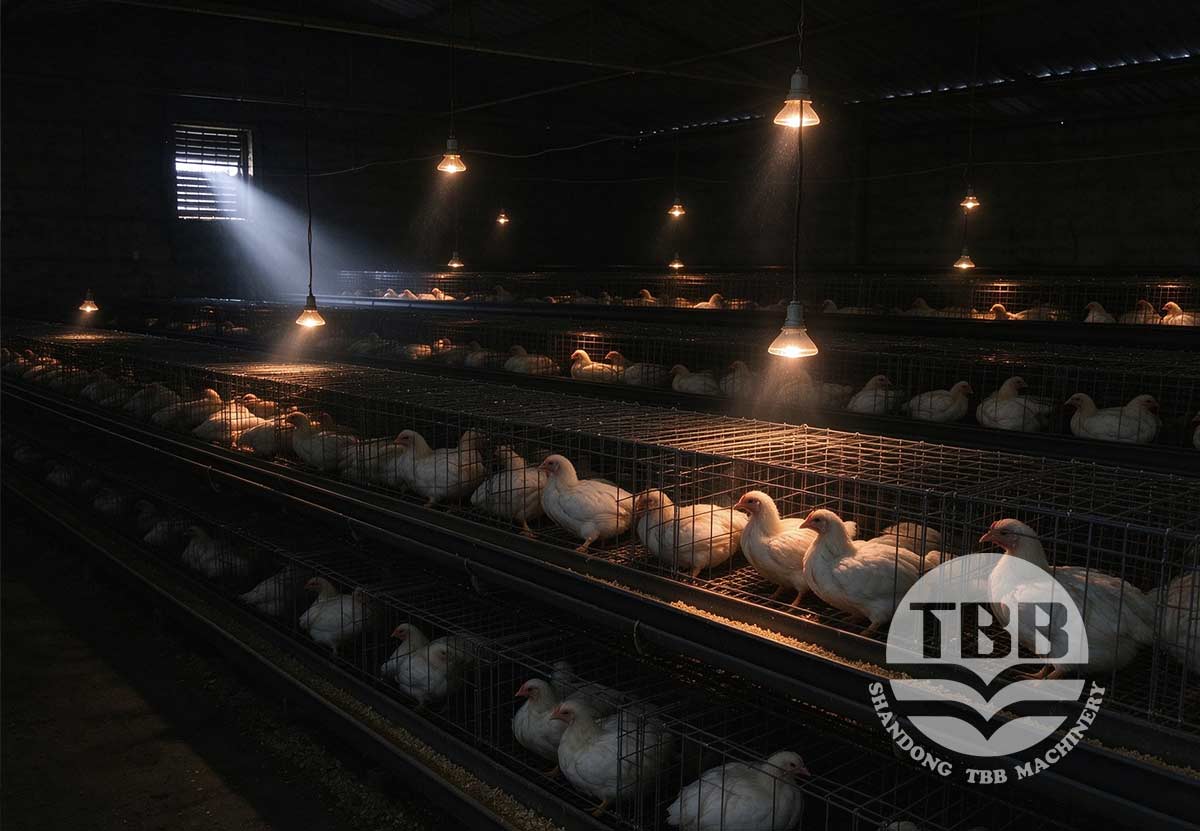
So minimum ventilation isn't a comfort setting up here. It's what holds oxygen up without dumping 5°C air onto the birds — which means inlet area and fan staging have to work at the low end, not only at full tunnel.
▶ Moisture is where the money actually goes
Outside air on the savanna sits near 80% humidity, with rain on 189 days a year. Cool air carries little water, so every kilogram of moisture from inside leaves on air that's already close to loaded.
Two things make that moisture: the birds breathing, and the manure. Respiration you can't turn off. Manure you can manage.
▶ The housing system decides how much air you need
In a floor house, manure stays in the building all cycle, releasing water vapour and ammonia the whole time. Your fans then get sized to carry a load you chose to keep indoors.
A cage system with belt manure removal takes it out daily, and the birds never stand in it. Take that source out of the building and you remove a large part of what the ventilation was being asked to handle — which is why at altitude the cage decision and the fan decision are one decision, bought once.
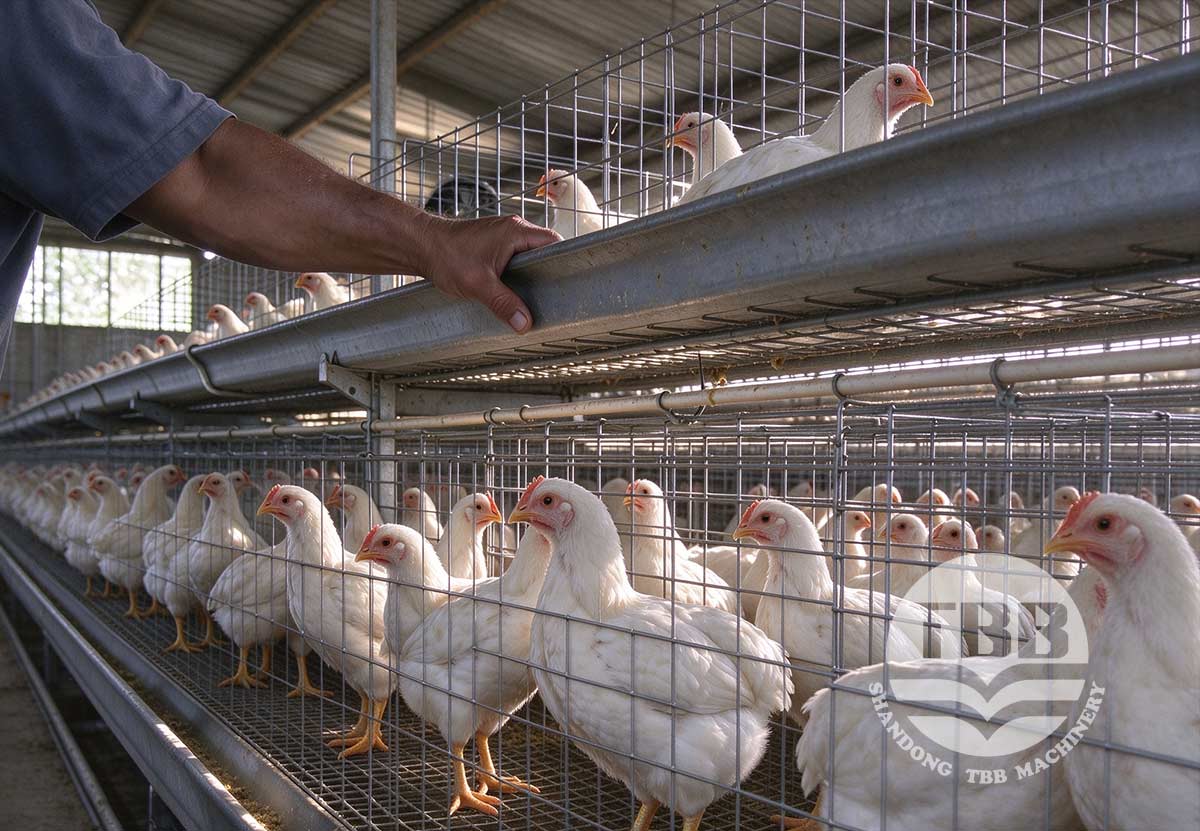
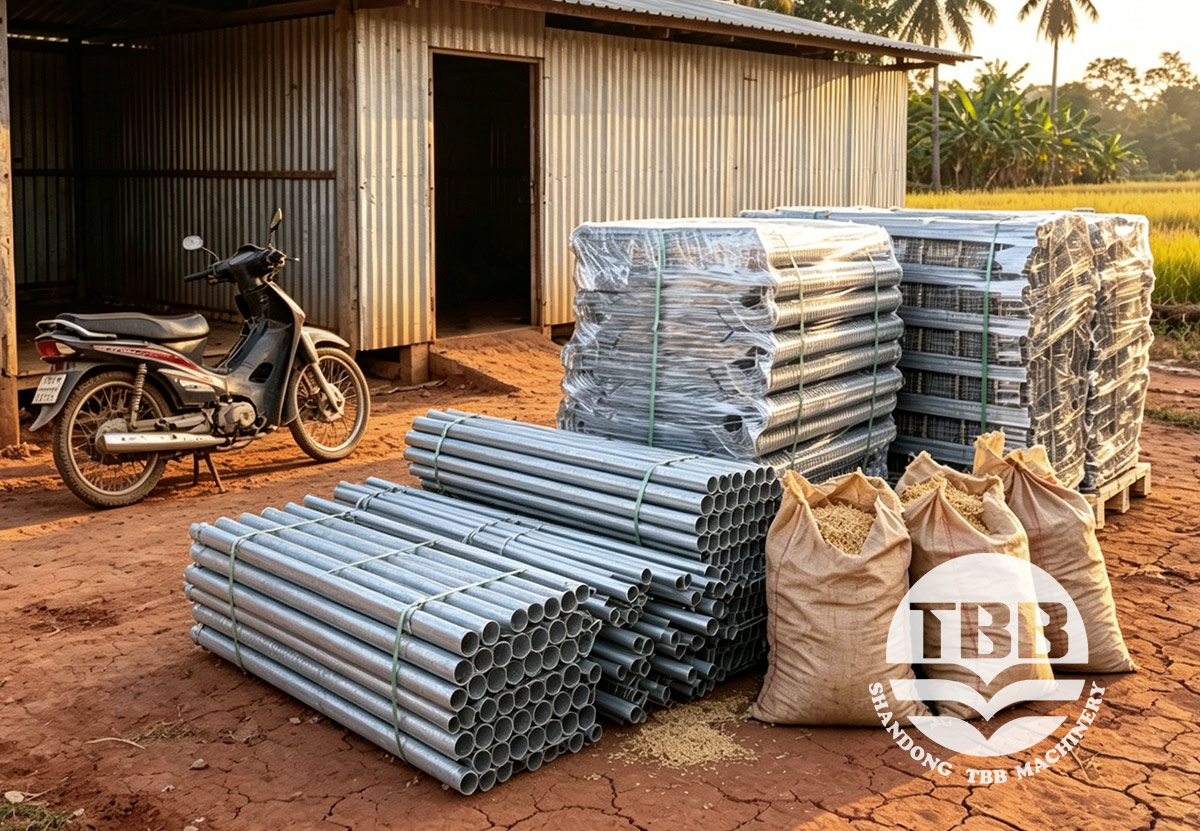
Humidity plus manure gas is also hard on steel. At 80% RH, hot-dip galvanized frames aren't an upgrade. They're the starting point.
▶ What to specify before you sign
Ask for these, in writing:
· Density-corrected fan performance at your site altitude, not sea level.
· Inlet area matched to the corrected fan capacity, with negative pressure holding at minimum ventilation.
· A minimum-ventilation stage that runs on cold nights without dropping inlet air onto the birds.
· A controller staging fans on temperature and humidity, with alarms and a fail-safe that opens inlets if power or a fan drops.
· Cages with daily belt manure removal, on hot-dip galvanized frames.
· Spare parts held in Colombia, and support in Spanish.
Size it for the flock you run — 10,000 to 20,000 birds per house is where commercial builds land. Cage system, feeding and drinking lines, manure removal, and ventilation belong in one specification, priced as one package. Structure and site work stay separate.
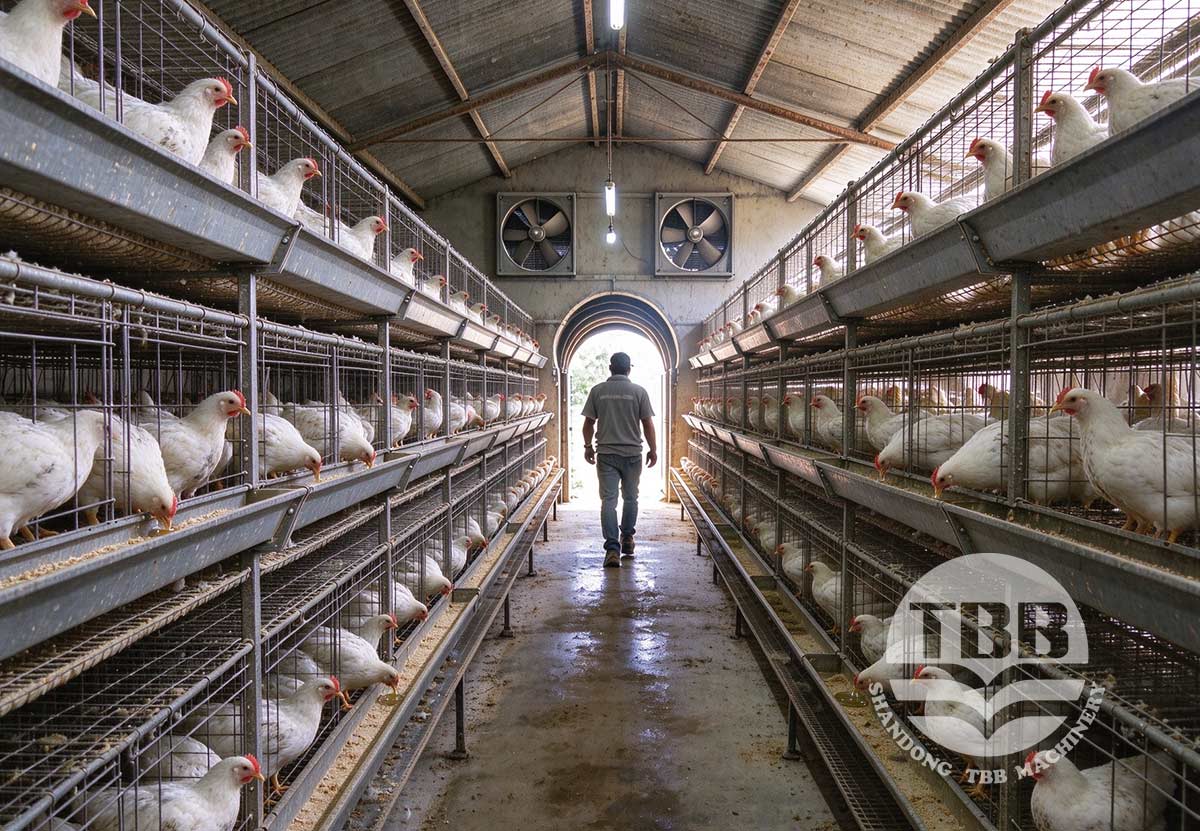
Send us your house dimensions, bird count, and altitude. We'll spec the cage system and the ventilation to match it, and quote this year's best price.
Message us for this year's best price.