



News
Rwanda's Commercial Poultry Push: Equipment Strategy for New Mid-Size Farms
Source: TBBView: 106Rwanda's Commercial Poultry Push: Equipment Strategy for New Mid-Size Farms
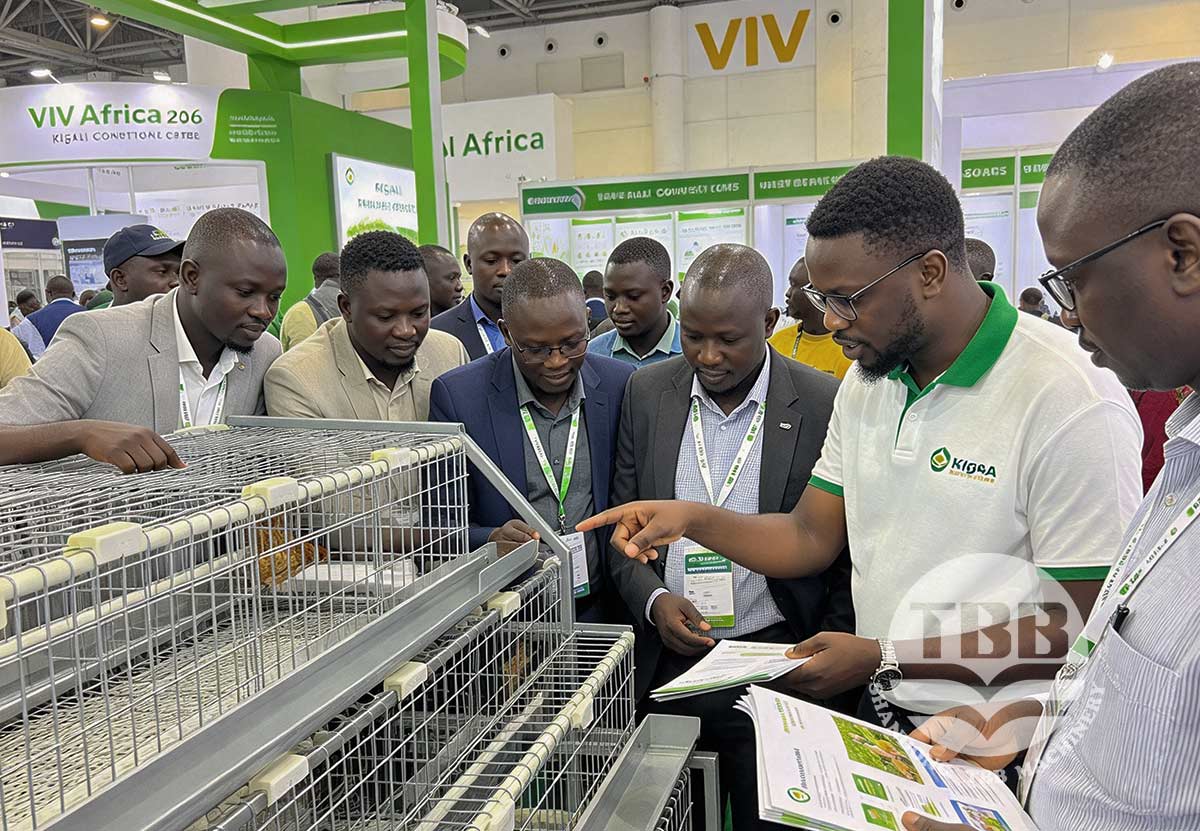
KIGALI — When VIV Africa opened at the Kigali Convention Centre on October 7–8 with 152 exhibitors from more than 50 countries, the longest queues formed not at the feed or genetics stands but at the cage and house-equipment booths, where mid-size Rwandan farmers compared systems side by side.
The timing fits a sector in overdrive. Rwanda's national flock more than doubled in a single year — from 6.2 million birds in 2024 to 12.9 million in 2025, according to the Ministry of Agriculture and Animal Resources — and the operations doing the adding are increasingly commercial rather than backyard. Egg output rose to 29,855 tonnes in 2025 from 20,211 tonnes a year earlier, while chicken meat reached 62,233 tonnes, up from 54,145 — numbers that explain why equipment suppliers treated Kigali as a priority stop.
Large commercial farms of 5,000 to 120,000 birds grew from 15 in 2019 to 56 in 2025, the ministry says, alongside roughly 550 medium-scale and 1,900 small commercial operators. In Gasabo District, Delphine Mutirabura runs 20,000 ISA Brown layers — double her 2021 start — producing 5,000 to 7,000 eggs a day and aiming for 50,000 birds once feed prices steady.
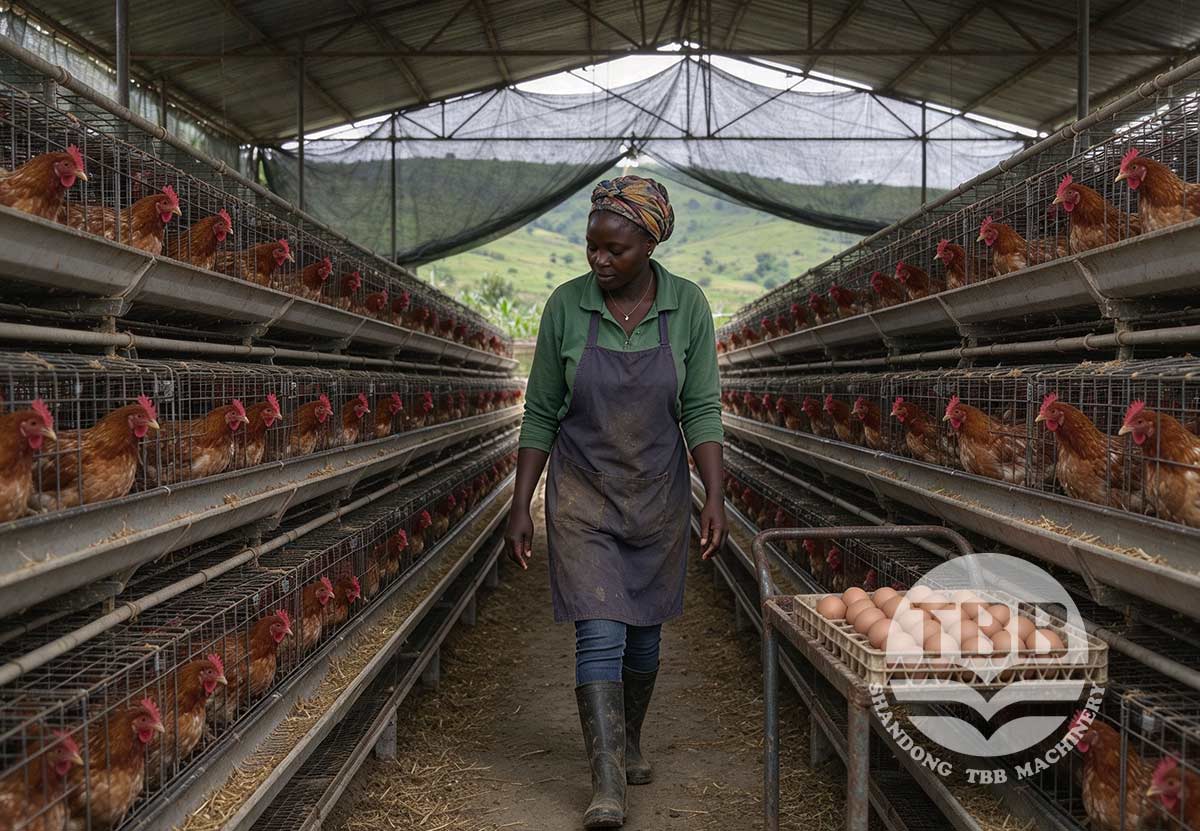
Her bottleneck is not demand; every tray sells before noon. It is input cost, and that is exactly what equipment choices are meant to blunt. Together the commercial layer now manages between 1.5 and 2 million birds. For a country where most agricultural output still comes from smallholders, that move toward organized, equipment-heavy production is the real engine of the boom — and the point where the equipment question stops being theoretical.
A farm crossing into the mid-size bracket — roughly 5,000 to 30,000 layers or broilers — faces a different buying decision than a smallholder. Land is tight, labor is not free, and feed now eats about 70 percent of production cost after prices climbed from roughly Rwf400 per kilogram in 2021 to Rwf750 today. The equipment choice is no longer “a house and some feeders.” It is how much automation the margin can carry.
▶ The first fork: cage versus floor rearing
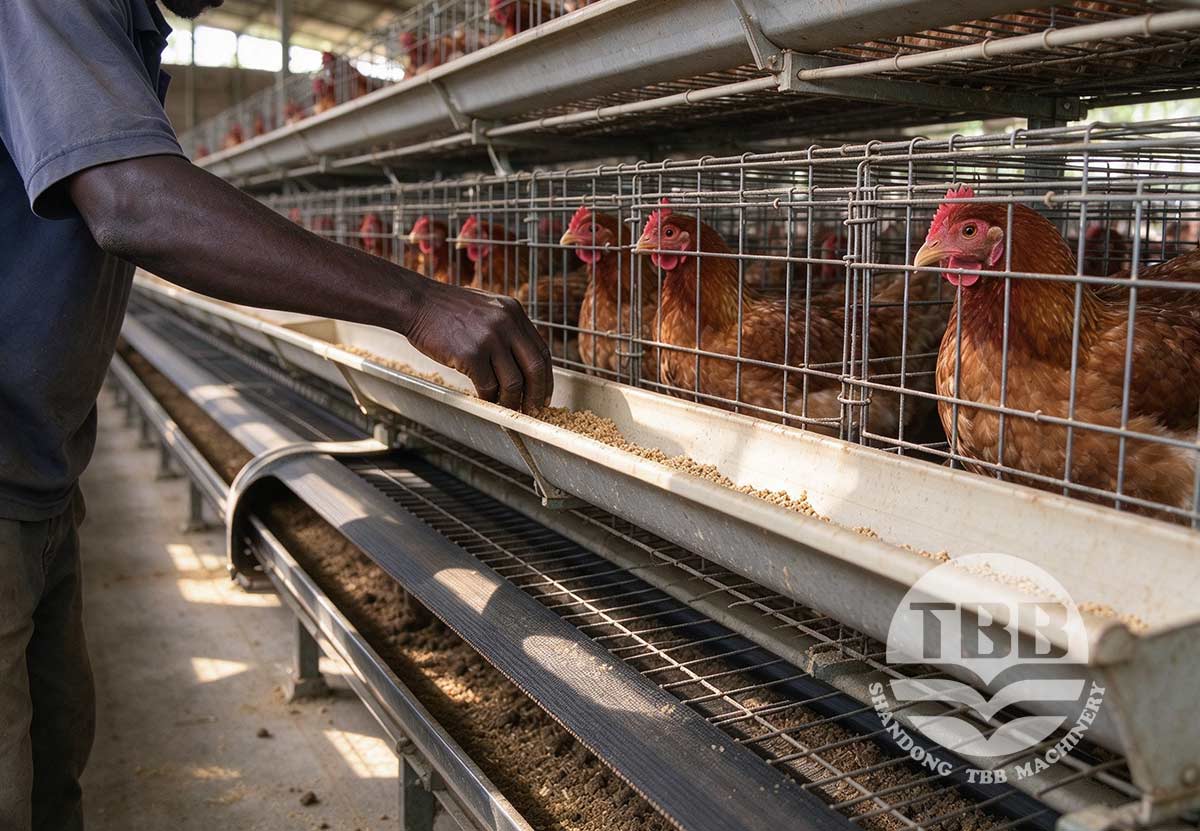
Battery cages pack far more birds per square metre, a real advantage in a small, hilly country where land competes with crops. Automated feed, egg-collection and manure belts turn one aisle into a controlled line.
Floor rearing keeps birds on litter inside a house with pan feeders and nipple drinkers; it needs more space but lower capital per bird and fewer objections from buyers who avoid caged eggs.
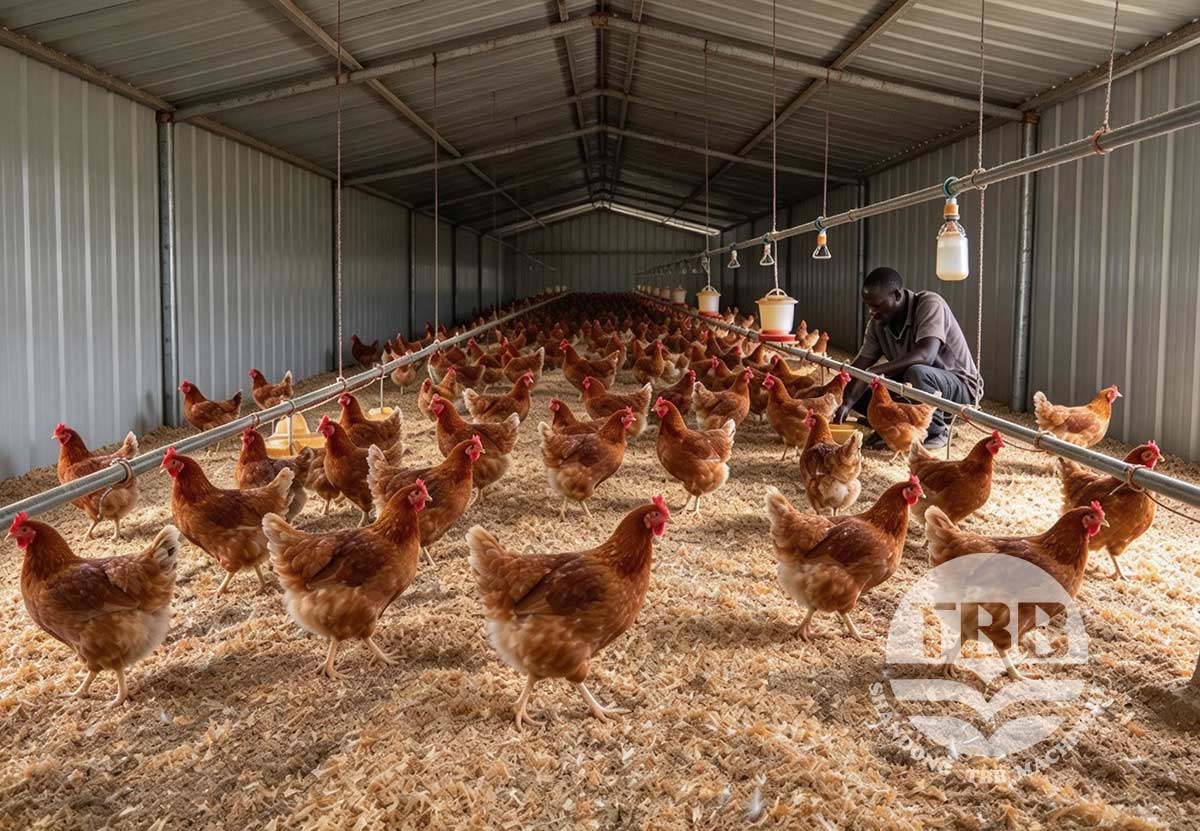
Both are sound mid-size options — the right call follows the buyer's market, not a universal rule.
▶ The second decision: how far to automate
Manual systems are cheapest to start but leak feed and labor. Belt-based automatic feeding and drinking cut waste directly — a live saving when feed is 70 percent of cost — and belt manure removal keeps houses drier and disease pressure lower. For a mid-size operator after steady output, a semi-automatic line is often the break-even point; full stacked H-type systems pay off only once bird numbers and land price justify the density.
▶ Rwanda is also building local answers
The Poultry Farming, Training and Innovation Centre, a public-private partnership with local colleges and the firm Abusol, runs a “frugal innovation” model — local cage fabrication, black-soldier-fly protein, antibiotic-free production — and has seeded women's and youth cooperatives.
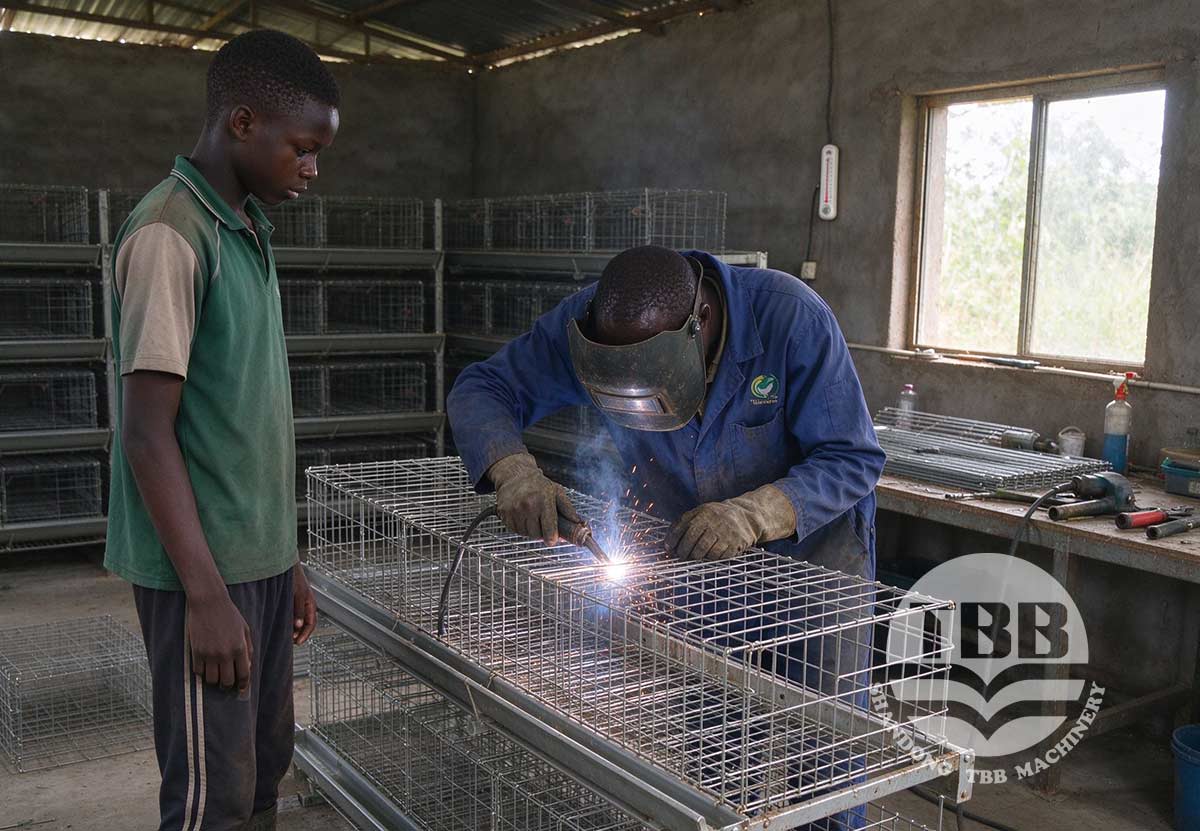
Imported full systems arrive engineered and supported; locally built ones cost less up front and are easier to service but vary in throughput. Mid-size farmers are increasingly weighing the two rather than defaulting to one.
▶ Policy is behind them
Under the fifth Strategic Plan for Agriculture Transformation and the Livestock Development Strategy, poultry is prioritized as a fast-cycling, high-return subsector; the government wants poultry at at least 30 percent of meat consumed and is backing seven hatcheries, more than ten feed mills and training for over 34,000 farmers. The Rwanda Poultry Industry Association flags equipment supply, feed, genetics, processing and cold-chain as the sector's priority investment gaps — a roadmap that reads like a checklist for the mid-size operator planning a house this year. A broader agriculture modernization push to 2029 aims to lift output and cut import dependence. Equipment is the bottleneck that decides whether the momentum holds.
For the mid-size farms now planning houses, the strategy is less about buying the most advanced system and more about matching automation to birds, land and feed math. Cage or floor, manual or automatic, the farms that scale treat equipment as a margin decision, not a checkbox. Planning a mid-size house in Rwanda? Message us for this year's best price.