



News
Pakistan Broiler Farming: Protecting Margins When Grain Prices Swing
Source: TBBView: 130Pakistan Broiler Farming: Protecting Margins When Grain Prices Swing
KARACHI — When the 2025 monsoon floods swept through Punjab and Sindh, they did not just damage standing crops. They wrecked the open-air maize piles that brokers and small mills rely on, damaging much of the harvest held in the open.
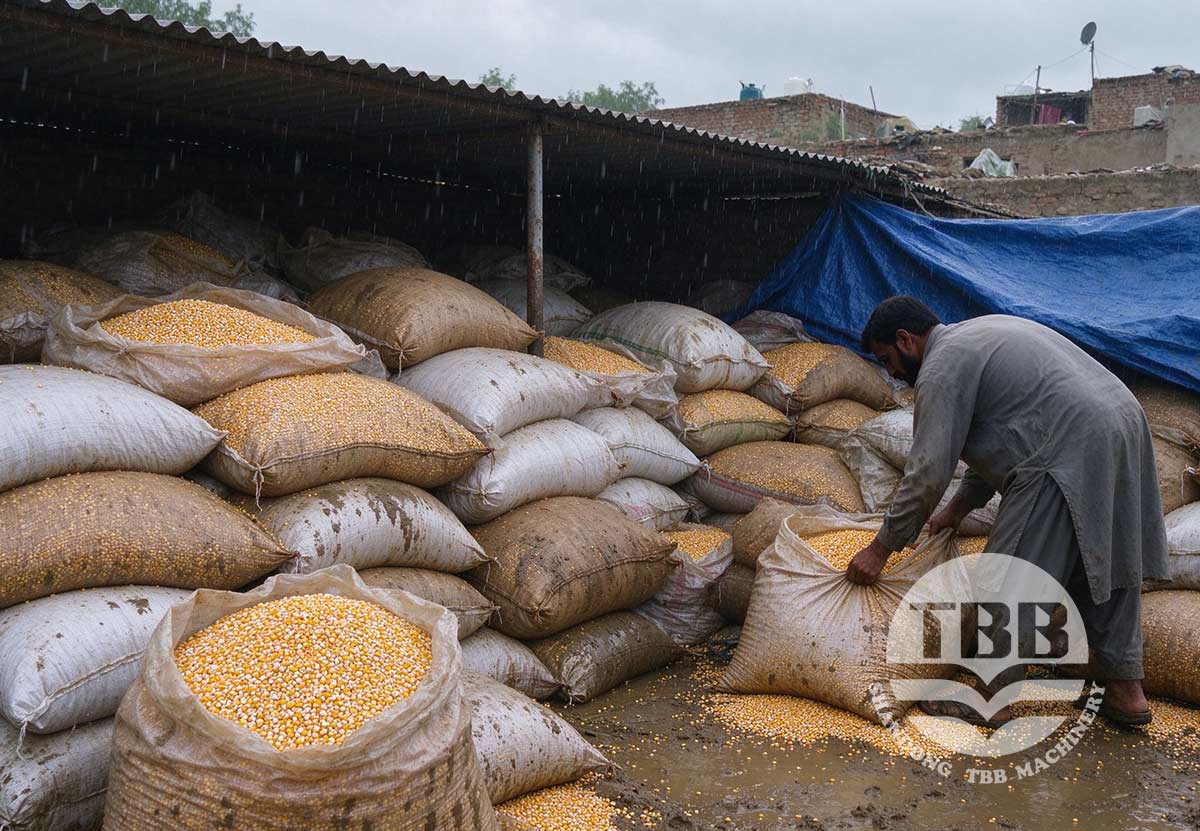
The price of maize, the backbone of Pakistan's poultry feed, shot up: in Punjab it climbed from Rs2,200 per maund at the start of the season to Rs3,600 — a 64 percent jump that traders said could reach Rs3,800. For a sector that runs on tight margins, the swing was not a footnote. It was the quarter's bottom line.
▶ Pakistan's broiler industry is no small operation
In FY2025 the country produced around 2.06 billion commercial broilers, making it the world's 11th-largest poultry meat producer. Output is growing about 8.1 percent a year and accounts for roughly 43 percent of national meat consumption, according to the Pakistan Bureau of Statistics economic survey. Almost all of that volume sits in environmentally controlled houses — industry estimates put the share at 97–98 percent, with 30,000 to 40,000 birds per house.
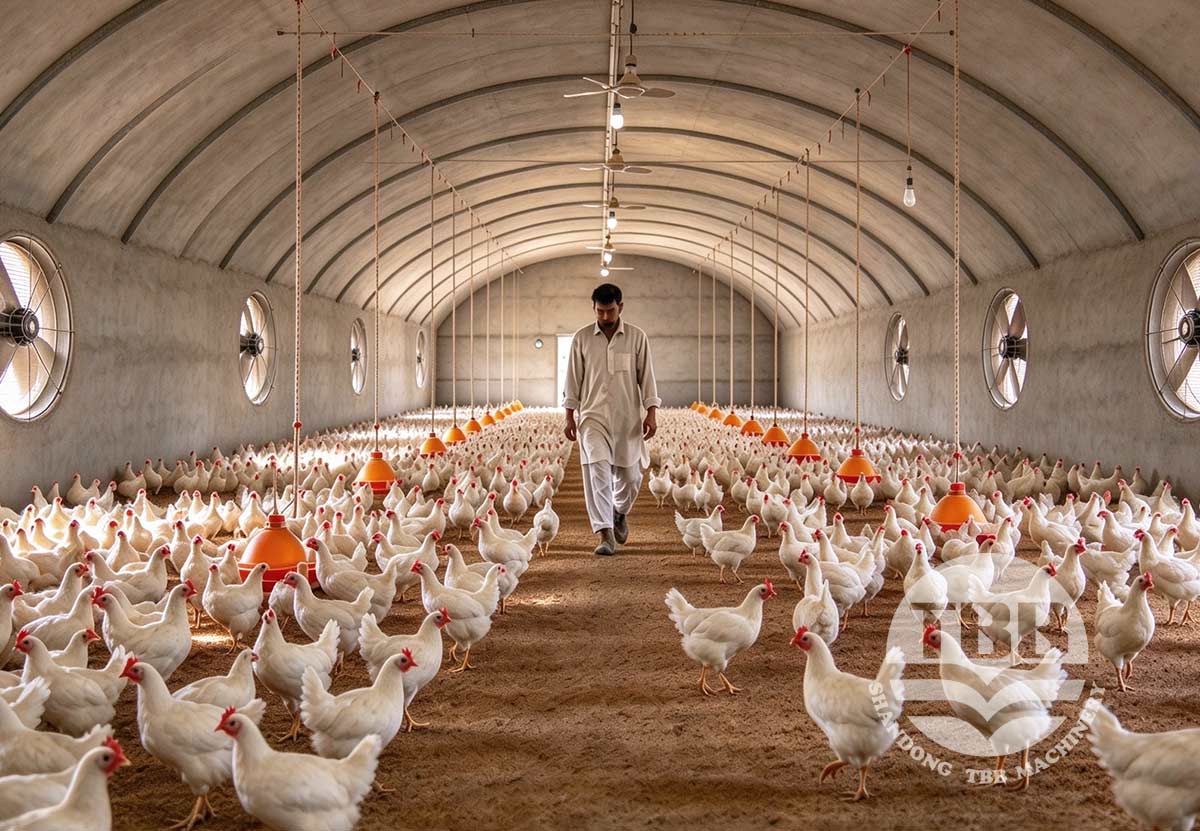
That is exactly the kind of dense, climate-managed setup where automation either saves money or quietly bleeds it.
▶ The reason a grain swing hits so hard is structural
Feed makes up 60 to 80 percent of a broiler's production cost, and maize alone is about 60 percent of the ration. When maize jumped 64 percent in a single year, feed cost rises 20 to 30 percent almost overnight, and there is nowhere for that to go but the farmer's margin. Local analysts put feed at 70 to 80 percent of cost; PoultryBaba, a production guide, cites 60 to 70 percent and notes typical feed conversion in controlled houses runs 1.2 to 1.6 — and that single ratio is where the entire argument about equipment lives or dies.
▶ Here is the part equipment actually touches
When feed is cheap, a loose 0.2 on FCR is annoying. When maize has doubled, that same 0.2 means paying for birds that never converted. Precision feeding lines that meter ration by growth stage, climate control that keeps heat stress and its mortality down, and belt manure removal that keeps the house dry all push the same lever: more meat per kilo of feed,
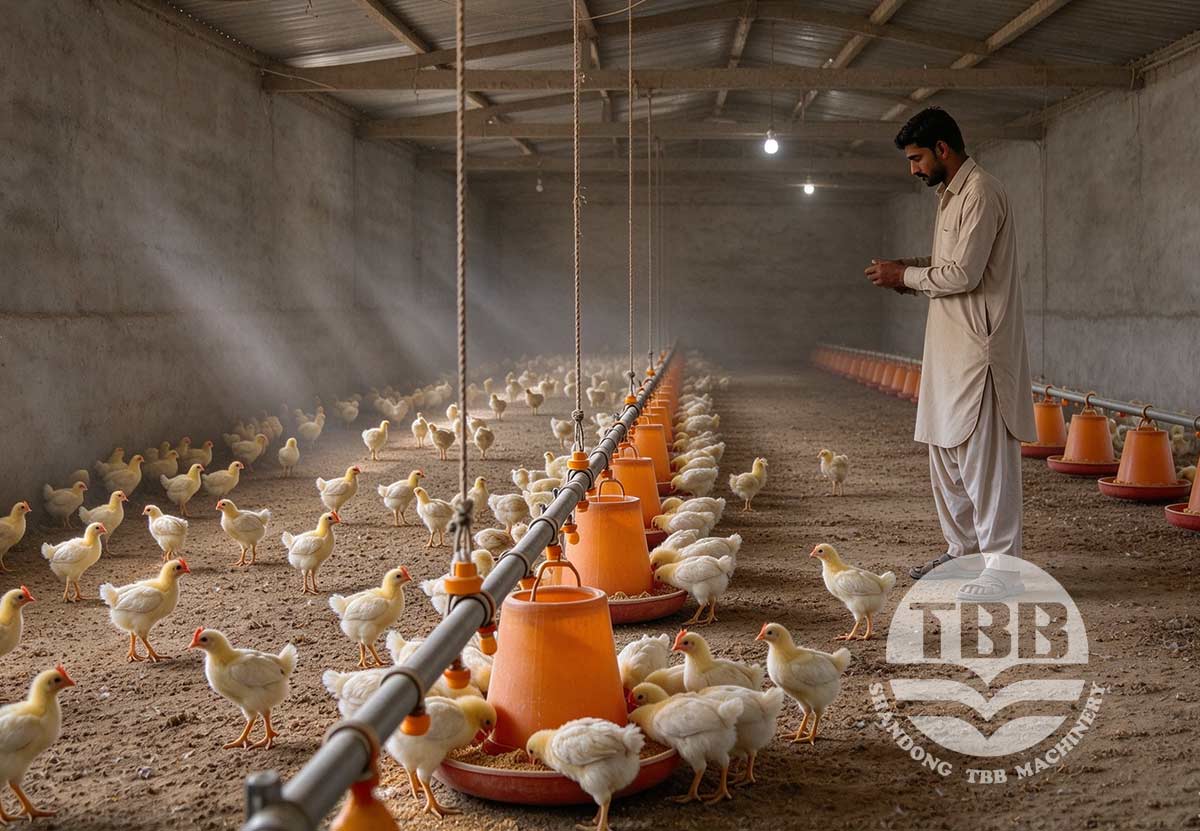
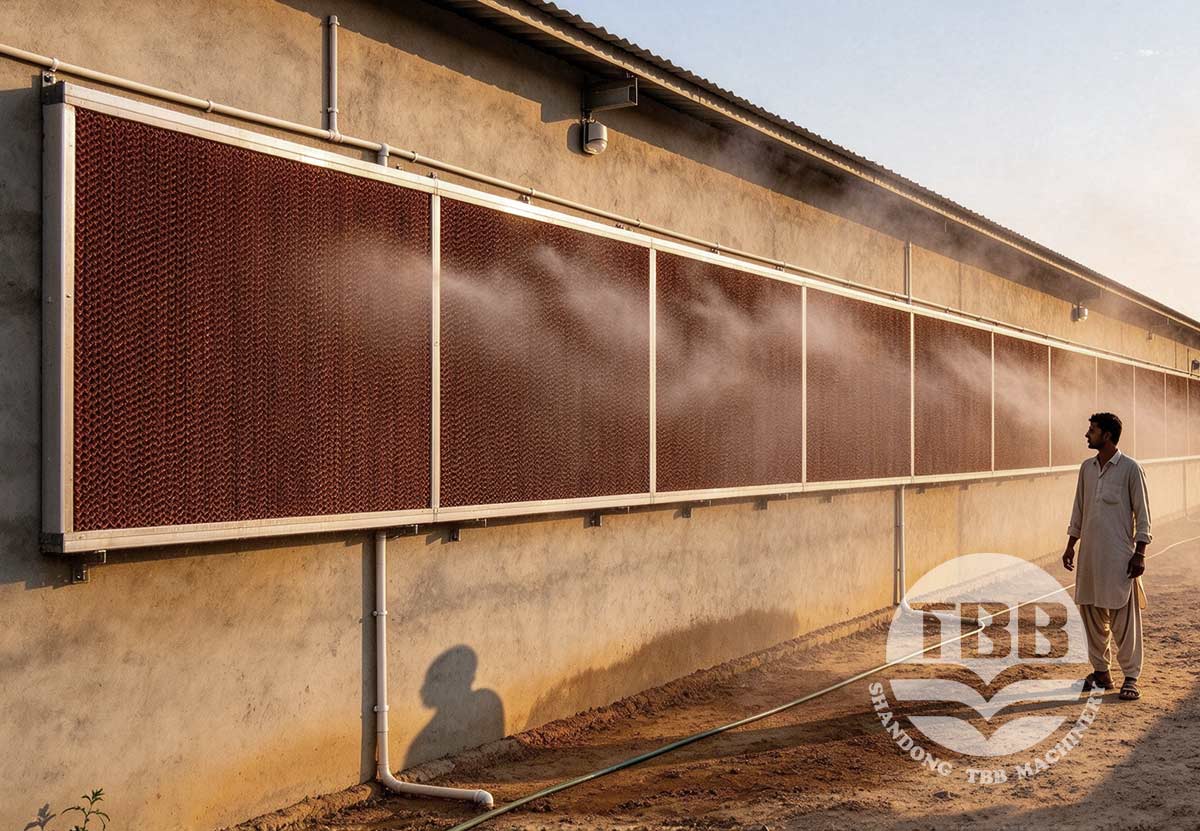
and fewer birds lost to environment rather than market. None of it lowers the grain price. What it does is widen the gap between what a farmer pays for feed and what he sells as meat. Pakistan's summer makes this sharper than the feed math alone suggests — temperatures routinely cross 40°C in Punjab and Sindh, and broilers convert feed worse as heat climbs, so heat-stress mortality can erase a season's margin in a single hot spell. Tuned ventilation and evaporative cooling are not a luxury there; they are the difference between a flock that reaches weight and one that doesn't.
▶ Both cage and floor systems have their place
Within that frame, both cage and floor systems have their place, and Pakistani operators run both. Cage broiler systems pack more birds per square metre and make daily inspection and manure handling straightforward. Well-managed floor, or deep-litter, systems suit operators who prioritise bird movement and certain buyer specifications. The choice is rarely about which is better in the abstract. It is about footprint, labor, local buyer requirements and how much automation a house can absorb. Suppliers that offer both, and help a farm size the system to its own margin math, tend to fit the market better than one-size pitches.
▶ The efficiency gap is still wide
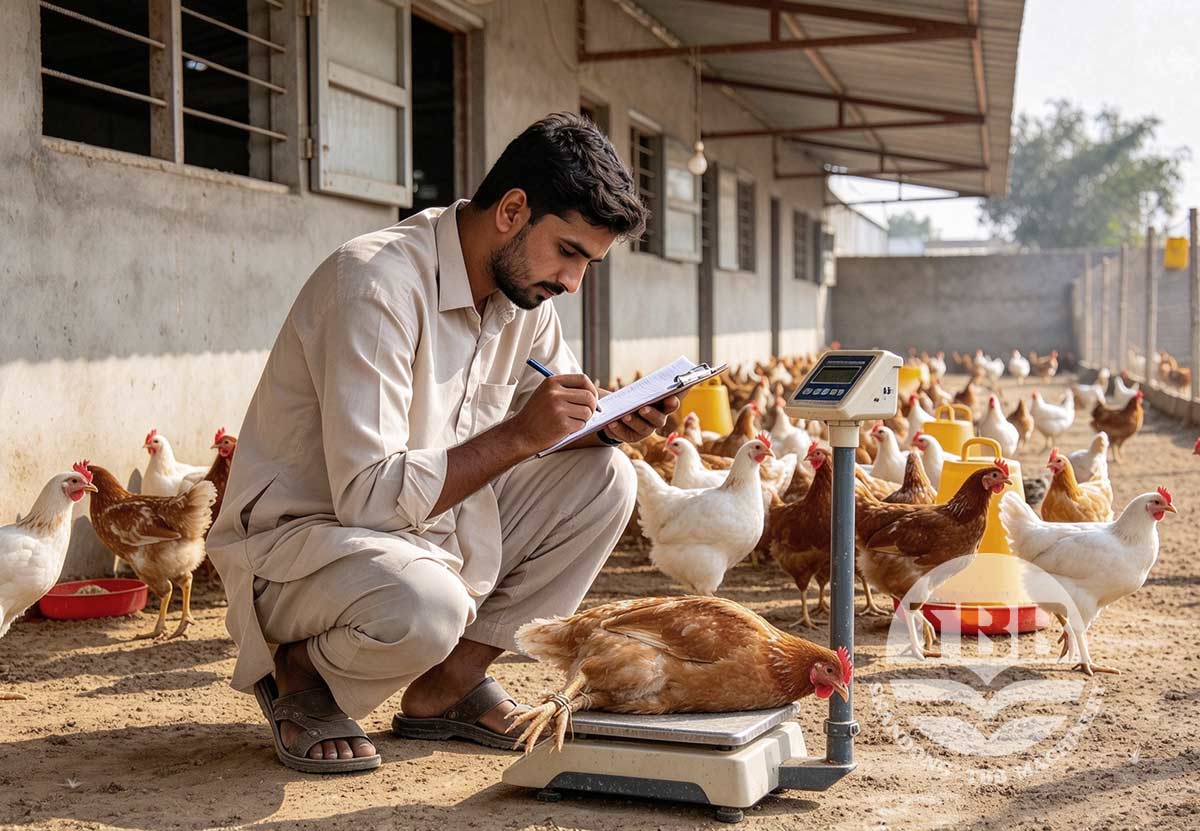
With 97–98 percent of commercial broilers already in controlled houses, the next gains are not about building more sheds but about what happens inside them. An FCR of 1.6 against 1.2 is the difference between a flock that barely covers feed and one that pays for itself — and across 2 billion birds a year, that spread is the real prize. A grower moving from hand-fed pans to a metering line, or from basic ventilation to tuned climate control, is often recovering the cost of the upgrade in a single bad grain year.
▶ The honest limit
No equipment solves the grain bill. Feed formulation, procurement timing and hedging against the next monsoon are still the farmer's job, and nobody should pretend a climate controller replaces a feed mill. What the right house does is make sure that, once expensive feed is in the trough, as little of it as possible is wasted, lost to sick birds, or spent on birds that never reach weight.
Planning a broiler house that holds its margin through the next grain swing? Reach out for this season's pricing on a setup sized to your footprint — cages or floor, we'll help you run the numbers.