



News
Broiler Prices Fall to ₱65 as Philippine Growers Weigh Backyard against 10,000 Birds a Cycle
Source: TBBView: 167Broiler Prices Fall to ₱65 as Philippine Growers Weigh Backyard against 10,000 Birds a Cycle
A Senate resolution filed on 8 October 2026 puts Philippine broiler prices under inquiry. Senate Resolution No. 726 puts broiler farmgate prices as low as ₱65 per kilogram in major producing areas in April 2026 — a figure it takes from the United Broiler Raisers Association rather than from a national average, and a low rather than a prevailing price — and warns that “continuously depressed farmgate prices alongside high production costs may force hog and poultry raisers, especially small and backyard raisers, to reduce production or exit the industry altogether”.
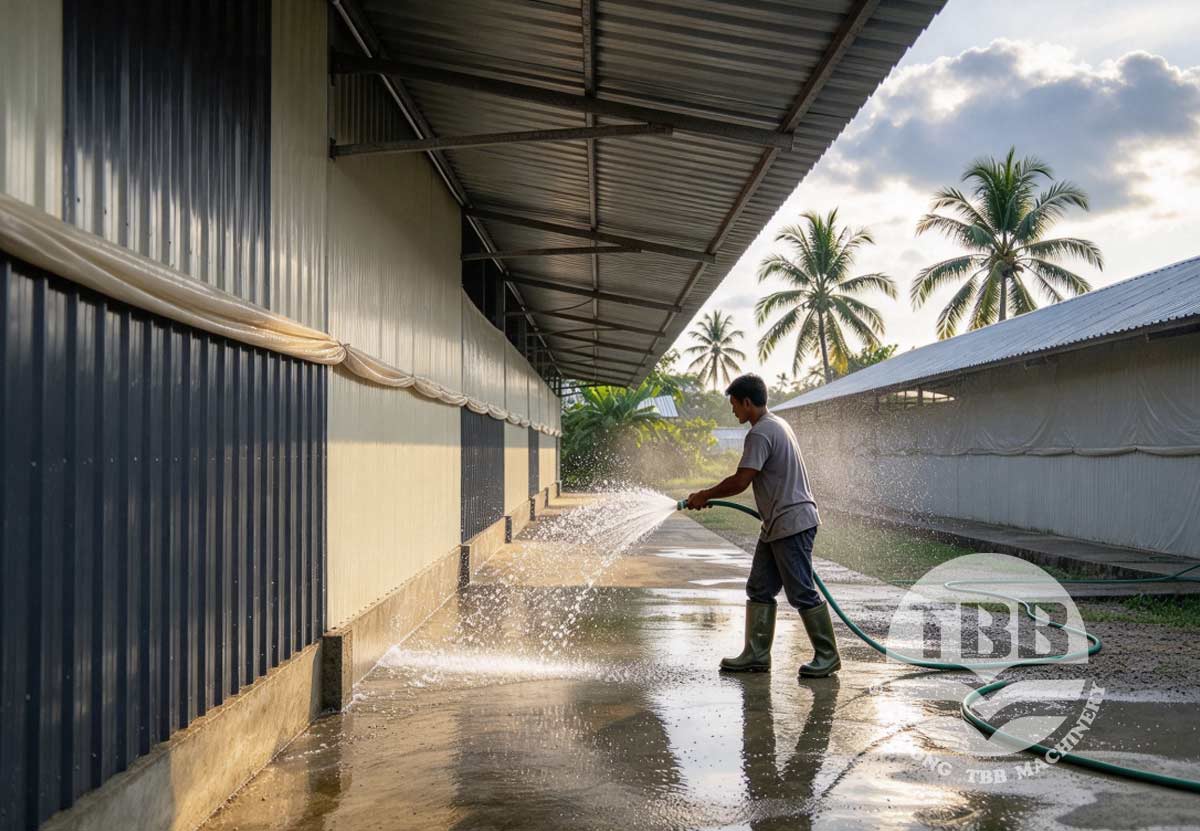
What makes the inquiry awkward is that production is not the problem. Chicken output reached 585,470 tonnes liveweight in the first quarter of 2026, up 5.8% from a year earlier, PSA reported. USDA's FAS Manila post puts average broiler farmgate prices 6.4% lower in the first half of 2026 than a year earlier.
▶ There is no problem in production
UBRA president Elias Jose Inciong puts the cause on the demand side: “It's really demand and oversupply. There is no problem in production,” he told reporters, and prices stayed soft even through the humid months when output is normally hardest to keep up. He traces the weakness to fuel. “A family's budget on fuel increased, therefore affecting food,” he said. Farmgate prices fell to about ₱107 per kilogram in May from roughly ₱120 a year earlier, while retail whole chicken held near ₱180 — the adjustment landing on the farm rather than being passed down the chain.
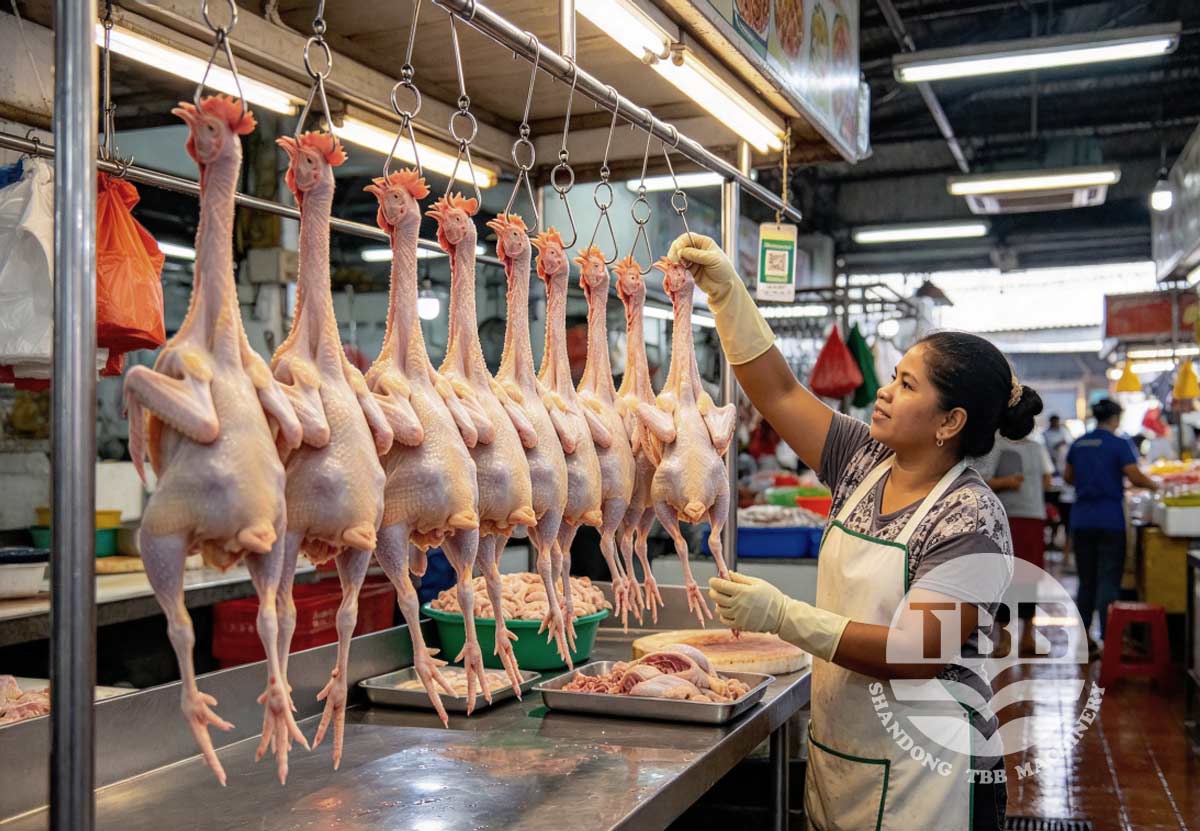
FAS Manila notes the swine sector's incomplete recovery from African swine fever keeps pushing protein demand toward chicken. It has not been enough to clear the surplus.
▶ Where the line sits, and who is crossing it
PSA sorts broiler operations by size. Smallhold — what the resolution calls backyard — runs to 500 birds; semi-commercial covers 501 to 10,000; commercial starts at 10,001. A house running 10,000 birds a cycle sits on that upper boundary — the step that separates a commercial farm from everything below it. The inventory has been moving up through the categories: between 1 July 2025 and 1 July 2026 semi-commercial holdings rose from 8.0 million birds to 10.5 million while smallhold fell from 91.5 million to 89.5 million, and commercial holdings reached 130 million, nearly 57% of the national chicken inventory.
▶ The route up runs through a contract
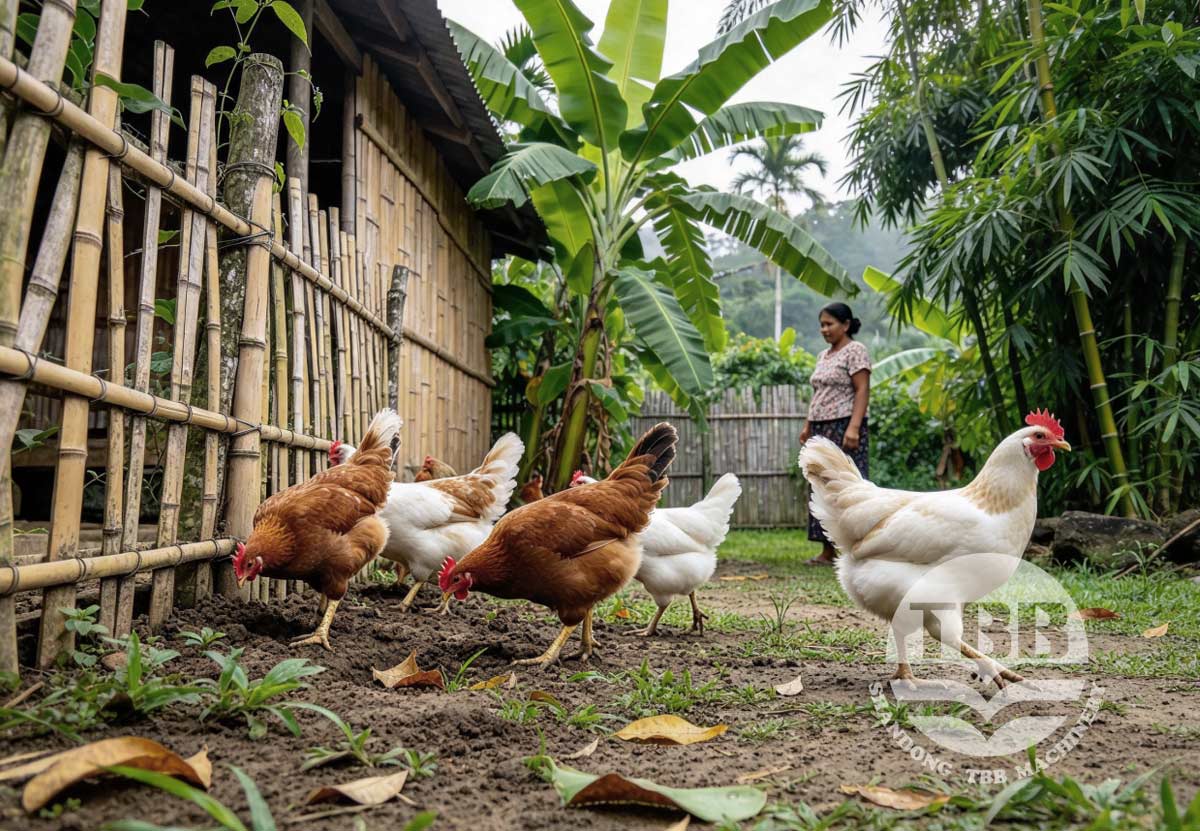
Contract growing is the documented route up, and it is not costless. In a fixed-fee arrangement the integrator supplies chicks, feed and the standards; the grower puts up the house, the labour and the day-to-day. FAS Manila reports that one of the largest integrators links farm partners with banks and covers chicks and feed for up to nine growing cycles. What the grower carries is production risk — mortality, feed conversion, bird performance — and often a cash bond per head before the first chick arrives. Some growers cannot post it and fall back on traders.
▶ Capital and processing
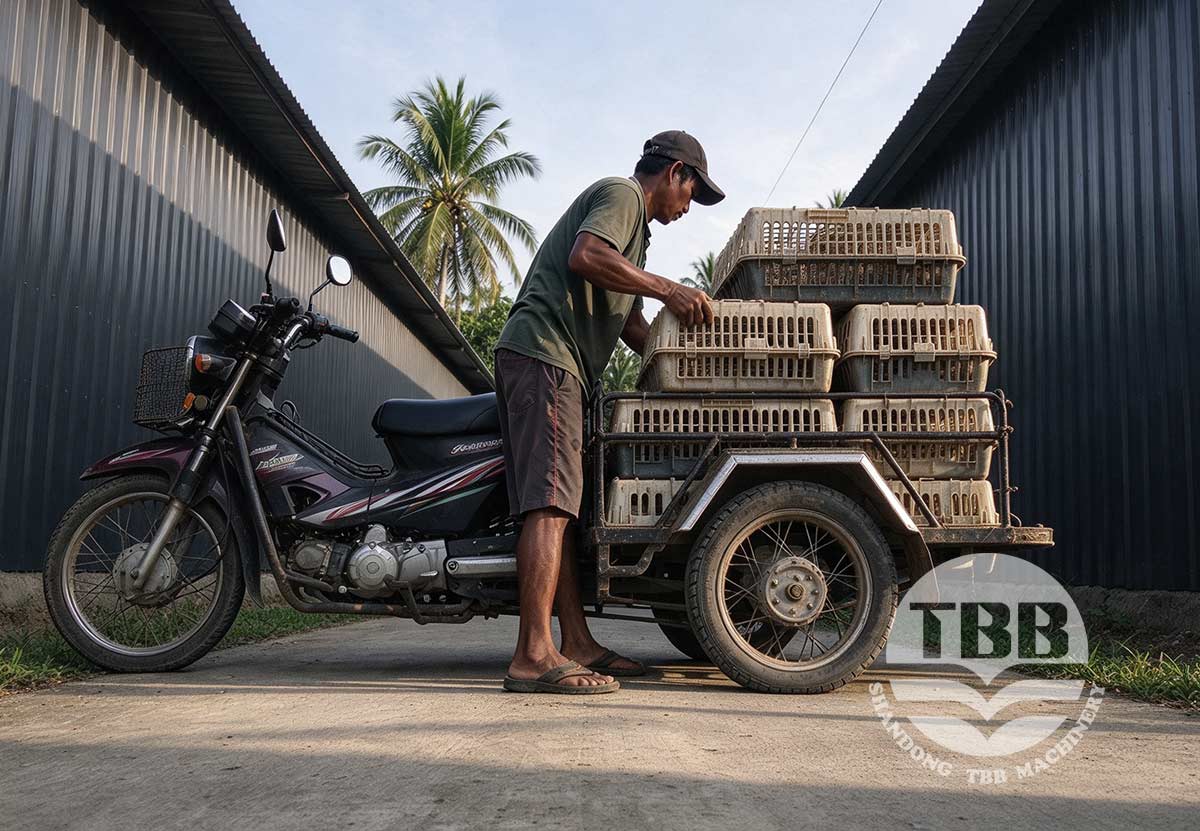
Capital is moving the same way. In Central Luzon, the top chicken-producing region, a company committed ₱160 million to expand from 124,000 to 320,000 birds, and a multinational was putting ₱500 million into a 40-hectare facility there as of May. Processing is going in alongside it: on 10 July, Art Fresh Chicken Corp. opened a dressing plant in San Pablo, Laguna handling more than 14 tonnes — around 5,600 to 7,000 live birds — a cycle. A single 10,000-bird house delivers birds in the same order the plant takes them in.
▶ The import side
Imports are growing faster than domestic output. Chicken imports reached 291,497 tonnes in the first half of 2026, up 13.9% year on year on Bureau of Animal Industry data, with Brazil at about half. FAS Manila forecasts imports of 780 thousand tonnes ready-to-cook for 2027, up 14.7%, against domestic production of 1.92 million tonnes, up 5.8% — putting imports at roughly 29% of supply. Most of what comes in is mechanically deboned meat and leg quarters bound for processors rather than the wet market.
▶ What changes at 10,000 birds
Below roughly 500 birds a broiler flock can be run by hand: feed and water carried in, litter handled at the end of the cycle, birds caught by walking the house. At 10,000 a cycle those jobs stop scaling — feed and water have to reach every tier without anyone carrying them, manure becomes a daily question, not a once-a-cycle one, and the days a house stands empty start to matter as much as the days it is full.
How those jobs get mechanised is a specification question, and it is answered differently on the floor than in cages. Neither answer creates demand, and no house size moves the retail price. What changes is the cost structure — enough, on a good cycle, to get through a bad one without exiting.
▶ A commercial message from a cage-system supplier
The reporting above is editorial. What follows is a commercial message from a cage-system supplier.
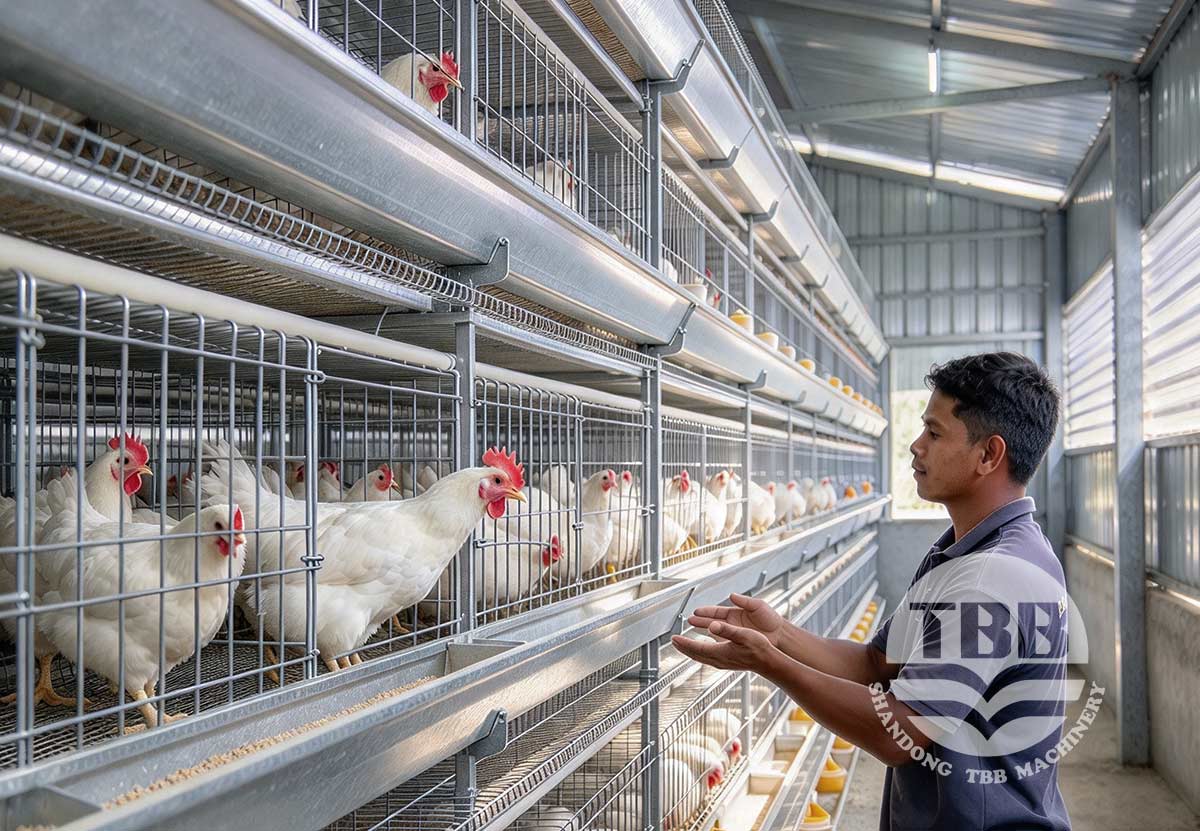
Tobetter builds broiler cage systems in A-frame and H-frame, hot-dip galvanized, with manure carried on belts and birds caught at the cage front. Mesh and frame go to the weight you take birds at — support under the feet, spacing that will not mark the breast. Feeding, drinking and manure removal are worked out together for the house you have. Give us the length, width, height under the roof and birds per cycle, and we will come back with the tier count, cage run and lines to fit them.
Message us for this year's best price.
Sources
Senate Resolution No. 726, filed 8 October 2026, reported by Manila Bulletin. UBRA president Elias Jose Inciong, The Philippine Star and Business Mirror, 25 May 2026. Philippine Statistics Authority: chicken output, 585,470 tonnes liveweight, Q1 2026; chicken inventory by farm classification as of 1 July 2025 and 1 July 2026. USDA FAS GAIN report RP2026-0029, Poultry and Products Annual, Manila, September 2026 (farmgate prices, contract growing, 2027 forecasts). Bureau of Animal Industry first-half 2026 import data. Department of Agriculture on Art Fresh Chicken Corp., San Pablo, Laguna, 10 July 2026.